
Introduction
Playlist activity changes quickly, making timely monitoring valuable for researchers, labels, marketers, and streaming businesses. Spotify playlists reveal signals around song visibility, artist momentum, genre movement, and audience preferences. Structured Music Data Scraping can organize these signals into consistent records, reducing manual checks and supporting faster market interpretation.
Automated collection can capture playlist additions, removals, positions, track metadata, and update frequency across selected playlists. Instead of relying on occasional snapshots, teams can compare changes over time and identify recurring patterns. Spotify Playlist Data Scraping for Market Research supports systematic monitoring, helping analysts connect playlist movement with promotional activity and listener behavior.
A workflow can turn changing playlist information into datasets for dashboards, reports, and forecasting models. Researchers can evaluate which tracks receive sustained exposure, where audience interests shift, and how playlist composition differs across categories. This approach creates a practical foundation for ongoing competitive monitoring and evidence-based music market decisions.
Smarter Automation Frameworks For Tracking Dynamic Playlist Changes
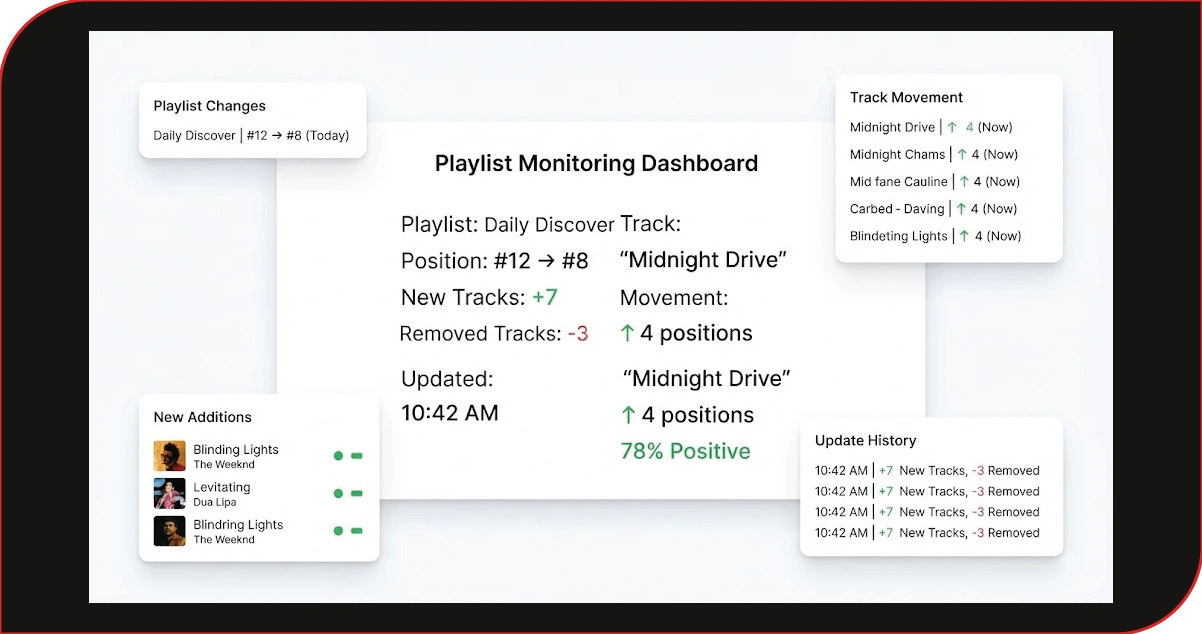
Playlist monitoring becomes more efficient when research teams move from repetitive manual checks to structured data collection workflows. Automated systems can regularly capture playlist positions, track additions and removals, song details, and update timestamps, creating reliable historical records for ongoing analysis. These records also support Spotify User Sentiment Using Scraped Data by providing consistent playlist activity patterns that can be compared across research periods, categories, and audience segments.
With Real-Time Spotify Playlist Tracking With Automated Scrapers, businesses can maintain recurring records without depending on individual monitoring sessions. Scheduled collection helps researchers identify frequent position changes, newly added tracks, and songs experiencing declining visibility. These records can support campaign evaluations and provide a stronger foundation for measuring playlist exposure over time.
Key workflow elements can include:
- Scheduled playlist data collection
- Historical record maintenance
- Position-change monitoring
- Track and artist identification
- Playlist update timestamp capture
- Structured data validation
Researchers can further examine genre movement and artist visibility by applying Spotify Playlist Scraping for Music Trends across selected playlist groups. Comparing repeated snapshots can reveal whether particular tracks maintain exposure or experience short-lived placement increases. Such observations can help analysts connect playlist activity with promotional campaigns, release schedules, and changing listener interests.
| Monitoring Area | Example Measurement |
|---|---|
| Playlist updates | 1,250 |
| Position records | 8,400 |
| Tracking intervals | 30 minutes |
| Historical periods | 12 weeks |
Strategic Data Structuring For Reliable Cross-Market Playlist Comparisons
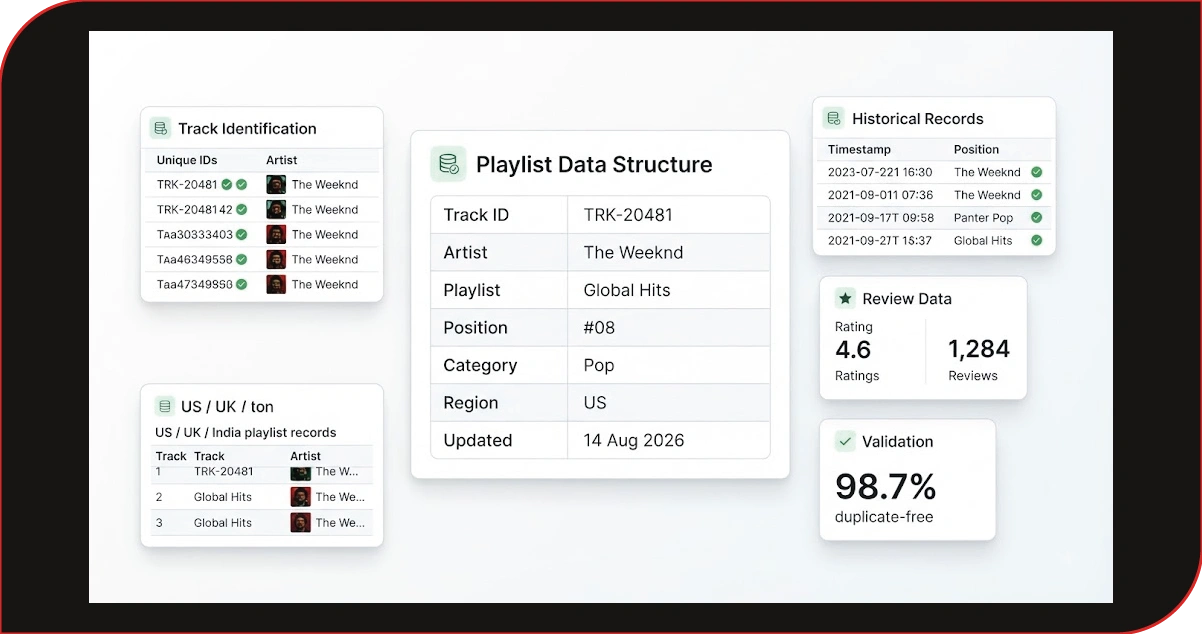
Effective market research relies on structuring collected information into consistent fields that enable accurate comparisons. Using standardized structures makes it easier to compare datasets across multiple playlists, while Scrape Data From Popular OTT Platform Apps can support broader data collection and analysis. This approach also minimizes inconsistencies that could affect reporting accuracy, trend evaluation, and overall interpretation.
Using Spotify Playlist Review Data Scraping for Market Research, analysts can incorporate review-related information alongside playlist characteristics. This additional context can help researchers examine audience responses and compare content reception across playlist categories. Combining review records with placement information creates a broader dataset for evaluating how content visibility corresponds with audience reactions.
Important structuring practices include:
- Standardized track identification
- Consistent artist fields
- Timestamp-based historical records
- Playlist category classification
- Review information organization
- Duplicate record validation
Businesses can also Extract Spotify Playlist and Track Data to create structured records for individual songs and their playlist appearances. This approach helps analysts identify recurring placements, track movement, artist representation, and playlist composition. Historical datasets can then support benchmarking across regions, categories, campaigns, and reporting periods without relying on isolated observations.
| Data Category | Sample Volume |
|---|---|
| Playlist records | 3,600 |
| Track entries | 12,500 |
| Artist records | 4,200 |
| Reporting periods | 16 |
Advanced Trend Interpretation Through Connected Audience Signals
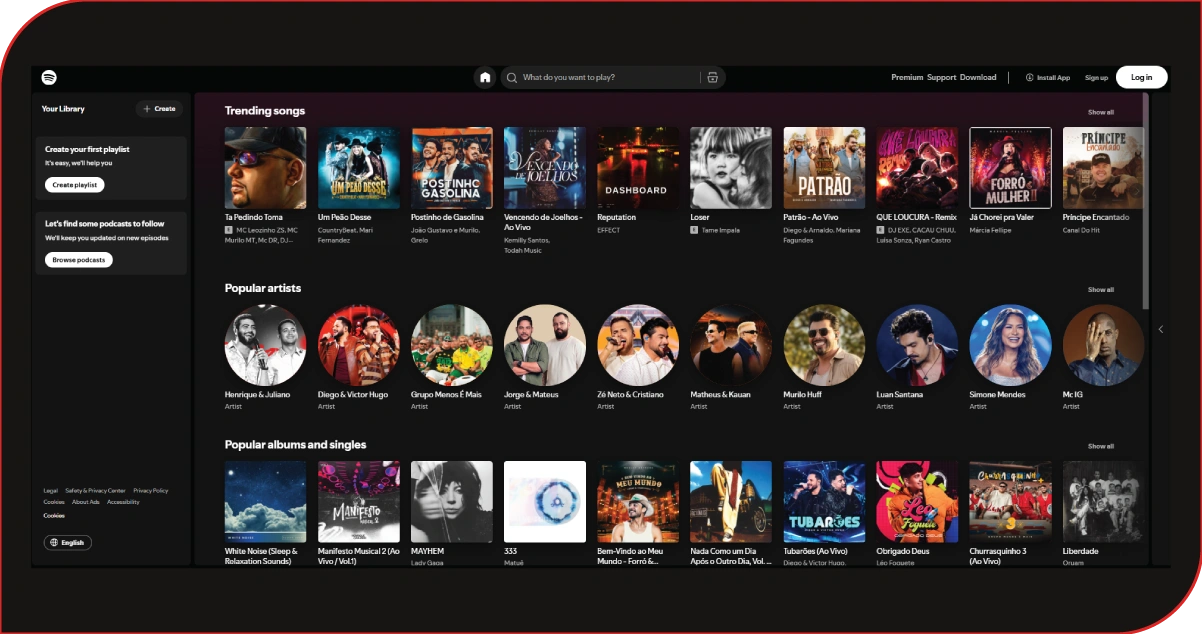
Playlist datasets become more valuable when researchers connect individual track activity with wider audience behavior. Historical records can reveal changes in playlist composition, song visibility, artist representation, and category movement. These observations allow analysts to identify recurring patterns rather than relying on isolated playlist snapshots when assessing evolving music-market conditions.
Through Spotify Audience Data Scraping for Music Analytics, teams can organize audience-related indicators alongside playlist records. This enables comparisons between playlist exposure and observed audience signals across different periods. Segmenting these datasets by playlist category, artist, or track can make recurring behavior easier to identify and provide stronger evidence for market-focused analysis.
A structured interpretation workflow may include:
- Historical playlist comparison
- Audience signal segmentation
- Track momentum measurement
- Genre movement evaluation
- Artist visibility assessment
- Period-based trend validation
Applying Music Streaming Trends Analysis Using Spotify Data Scraping can further connect playlist movement with broader streaming patterns. Researchers can compare track positions, additions, removals, and audience indicators to understand changing momentum. This approach can support evaluations of emerging genres, artist performance, campaign timing, and shifts in content preferences across selected markets.
| Trend Indicator | Example Result |
|---|---|
| Weekly position shifts | 18% |
| New track entries | 640 |
| Audience records | 9,800 |
| Trend review periods | 10 weeks |
How OTT Scrape Can Help You?
A structured workflow can make playlist monitoring easier to manage across recurring research cycles. By applying Spotify Playlist Data Scraping for Market Research within a centralized process, we can organize playlist records, refresh datasets, and prepare consistent outputs for analysts without relying on repetitive manual collection.
- Automated collection across selected playlist sources
- Scheduled refreshes for changing playlist records
- Structured datasets for reporting and dashboards
- Historical storage for comparison and trend review
- Flexible fields for tracks, artists, and positions
- Quality checks for cleaner downstream analysis
For teams requiring recurring signals, Spotify Streaming Trend Data Extraction can be incorporated into reporting workflows after the collection stage. This helps transform changing playlist information into usable records for market comparisons, performance reviews, and strategic planning.
Conclusion
Consistent playlist monitoring gives research teams a clearer view of changing song visibility, artist momentum, audience interests, and category movement. When Spotify Playlist Data Scraping for Market Research is integrated with structured storage and scheduled refreshes, analysts can compare historical records, identify recurring signals, and build timely reports without depending on scattered manual observations.
Reliable datasets also make playlist research easier to connect with broader business questions. Spotify Playlist Review Data Scraping for Market Research can add review-based context to playlist observations, helping teams evaluate content response alongside placement changes and streaming signals. Contact OTT Scrape to build a scalable playlist data workflow for your research needs.