
Introduction
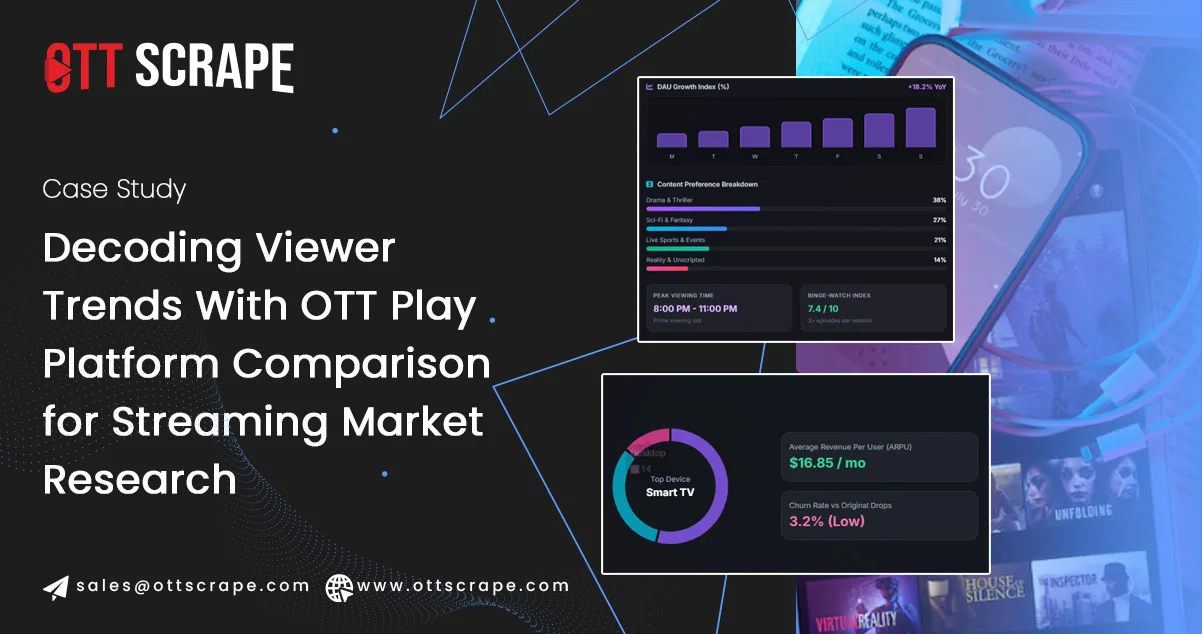
Our OTT Play Platform Comparison for Streaming Market Research solution helped a global media enterprise better understand changing viewer preferences, content distribution patterns, and competitive differences across streaming services. We developed a structured research approach that consolidated relevant information from authorized sources, enabling the enterprise to examine streaming catalogs more consistently and identify opportunities for improving content planning and audience engagement.
To address the client's research requirements, we implemented an OTT Content Metadata Scraper for Media Companies that collected and organized relevant metadata, including title names, genres, release years, language information, and regional availability. The system standardized records from different sources, reducing inconsistencies and simplifying comparisons between competing platforms. The improved data structure also supported more efficient reporting and reduced the effort required to prepare datasets for detailed analysis.
Our approach further incorporated Scrape OTT Platform Data capabilities to establish a repeatable workflow for gathering relevant catalog information from permitted sources. With structured datasets available for analysis, the client could examine content distribution patterns, assess changes in platform offerings, and prioritize areas for further audience research. The resulting framework supported informed decisions about content acquisition, regional expansion, and competitive strategy.
The Client
The client, an international media enterprise, wanted to develop a comprehensive understanding of the competitive streaming landscape across different regions. The existing research process relied on fragmented datasets and inconsistent reporting formats, making it difficult to compare platforms using common indicators. We introduced OTT Play Platform Comparison for Streaming Market Research to establish a consistent analytical framework that could help the client assess catalog differences, identify underserved content categories, and make better-informed decisions about programming priorities and market expansion.
Another important objective was to improve the quality and usability of streaming metadata across the client's research operations. The enterprise needed structured records that could be integrated into its internal analytical systems without extensive manual cleaning or repeated formatting. Our Extract OTT Platform Catalog Metadata for Comparison approach helped organize relevant information into standardized fields, allowing researchers to evaluate catalog breadth, compare content attributes, and examine regional differences more efficiently.
The client also wanted to strengthen its ongoing research capabilities by establishing a repeatable process for collecting and organizing relevant information from supported streaming sources. Implementing OTT Platform Data Scraping Content workflows helped address this requirement by creating a systematic approach to metadata collection, validation, and classification. The objective was to reduce dependence on disconnected spreadsheets, simplify the preparation of comparative reports, and make updates easier to incorporate into existing workflows.
Key Challenges
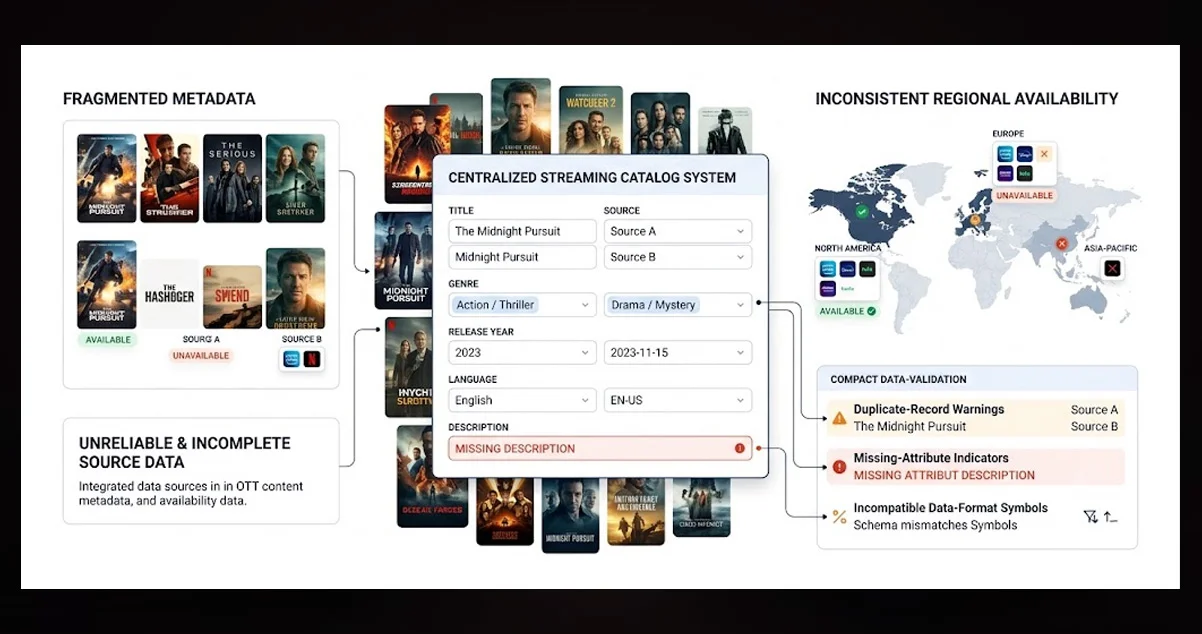
The client struggled to consolidate streaming catalog information collected from multiple platforms and regional sources. Differences in metadata formats, inconsistent genre classifications, and incomplete title descriptions made accurate comparisons difficult. Implementing OTT Content Metadata API for Competitive Intelligence requirements was also challenging because the existing datasets lacked consistent structures for integrating information into internal analytical systems.
Another significant obstacle was tracking changes in content availability across different markets. Titles accessible in one region were not necessarily available in another, while catalog updates made previously collected information less reliable over time. Addressing OTT Availability Data Extraction for Market Research requirements became essential for organizing regional availability records, identifying catalog variations, and supporting more reliable comparisons across the streaming services included in the research.
The client also needed to distinguish between observable catalog characteristics and actual audience preferences. Although content libraries offered useful indicators of platform positioning, fragmented metadata made it difficult to identify relevant patterns for further investigation. Challenges associated with OTT Data Scraping Challenges included inconsistent source structures, duplicate records, missing attributes, and restrictions on accessing certain information.
Key Solutions
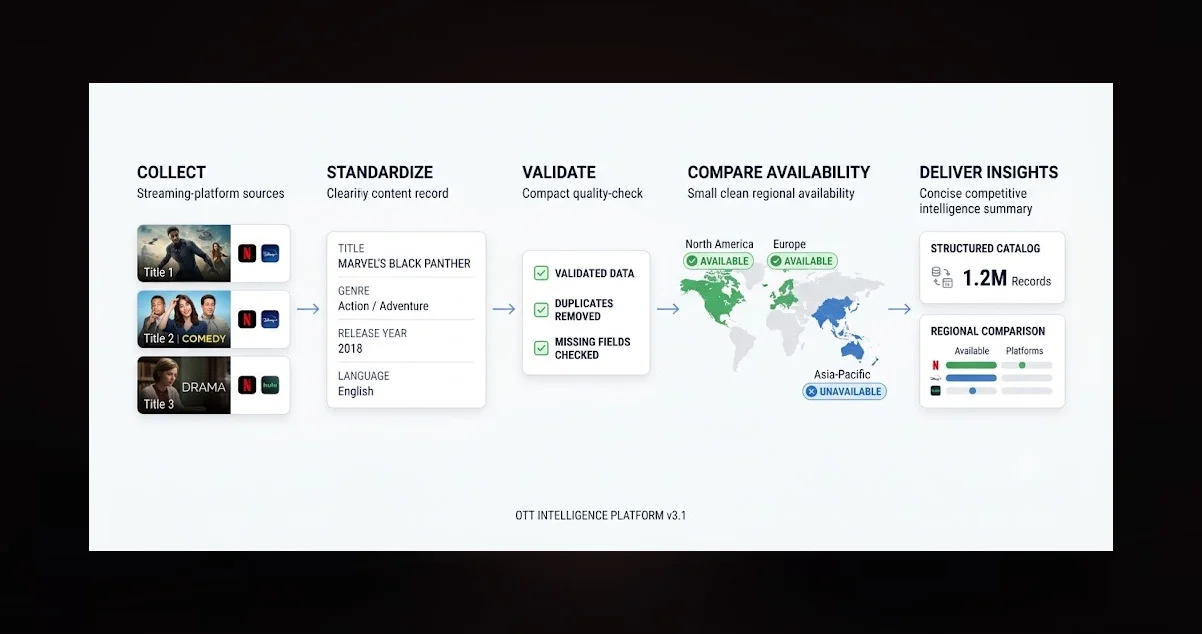
The process captured available attributes such as title names, genres, release years, language details, and regional availability, helping analysts compare platform offerings using standardized fields. By incorporating OTT Content Metadata Scraper for Media Companies capabilities, we established a more systematic method for collecting, validating, and classifying streaming metadata, reducing repetitive manual work and improving the usability of research datasets.
To improve the reliability of comparative analysis, we introduced data validation rules, duplicate detection, and standardized classification procedures. These measures helped resolve inconsistencies between source formats and made it easier to identify missing or conflicting information. Our OTT Availability Data Extraction for Market Research workflow also organized regional availability records, allowing researchers to assess differences between supported markets and review observable catalog changes.
Through OTT Content Metadata API for Competitive Intelligence capabilities, the enterprise could incorporate organized records into its reporting workflows and conduct comparisons with less manual preparation. By combining consistent metadata structures with quality checks and scalable data delivery, we helped the client establish a practical foundation for evaluating streaming competition, identifying content opportunities, and supporting evidence-based strategic planning.
Structured Streaming Catalog Metrics for Consistent Market Analysis
The following table presents illustrative dataset coverage metrics for evaluating streaming catalogs and supporting recurring market research. These figures are examples for case-study presentation, not verified client results.
| Metric | Initial Coverage | Expanded Coverage | Improvement | Review Frequency |
|---|---|---|---|---|
| Streaming platforms | 10 | 25 | 150% | Weekly |
| Catalog records | 20,000 | 50,000 | 150% | Weekly |
| Metadata completeness | 70% | 95% | 25 pp | Monthly |
| Regional markets | 4 | 12 | 200% | Monthly |
| Validation accuracy | 80% | 96% | 16 pp | Weekly |
The structured dataset enabled the client to compare catalog attributes across a wider range of platforms and markets. By applying Web Scraping OTT Platforms for Market Intelligence, research teams could organize available information into consistent categories, identify regional content differences, and prioritize areas requiring deeper investigation.
The standardized framework further supported Extract OTT Platform Catalog Metadata for Comparison by making title attributes, genre classifications, and regional records easier to assess within a common structure. These improvements provided a stronger foundation for examining competitive positioning, identifying content gaps, and supporting research-driven decisions about streaming market opportunities.
Advantages of Collecting Data Using OTT Scrape
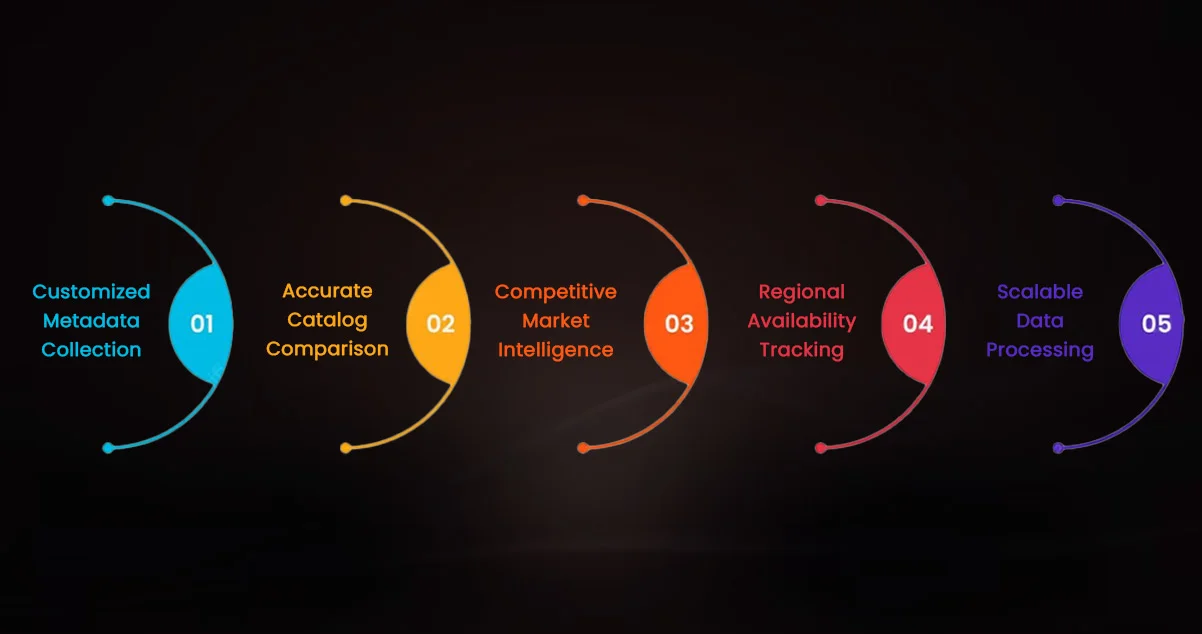
- Customized Metadata
Collection
We provide tailored OTT Content Metadata Scraper for Media Companies solutions that organize titles, genres, release dates, languages, and regional catalog details for consistent streaming research. - Accurate Catalog
Comparison
Our Extract OTT Platform Catalog Metadata for Comparison approach standardizes available content records, helping research teams evaluate catalog diversity, compare platform offerings, and identify potential content gaps. - Competitive Market
Intelligence
We use OTT Content Metadata API for Competitive Intelligence capabilities to deliver structured metadata into analytical systems, supporting competitor assessments, organized reporting, and informed streaming market decisions. - Regional Availability
Tracking
Our OTT Availability Data Extraction for Market Research services organize regional catalog information, helping analysts examine title availability differences and identify opportunities for market-specific content planning. - Scalable Data
Processing
We address OTT Data Scraping Challenges through adaptable collection workflows, validation checks, and standardized records that support reliable research as platform coverage and analytical requirements expand.
Client's Testimonial
Conclusion
The implementation established an organized foundation for streaming market analysis by consolidating relevant catalog information into a standardized research environment. With OTT Play Platform Comparison for Streaming Market Research, media enterprises can evaluate catalog differences more systematically and distinguish content availability from actual viewer demand.
A structured approach using OTT Availability Data Extraction for Market Research helps organizations organize streaming data, assess competitive positioning, and support informed content distribution decisions. Contact OTT Scrape to discuss your streaming research objectives and identify a suitable data collection solution for your business needs.