
Introduction
The digital entertainment landscape evolves rapidly, requiring media companies to adopt advanced technology to manage extensive digital libraries. Traditional workflows often fall short when handling massive volumes of video assets, metadata, and user requests across multiple devices. Modern media networks frequently Scrape OTT Platform Data to gather crucial market intelligence and benchmark their streaming services against industry competitors.
To overcome operational bottlenecks, businesses implement robust technical connectivity. This infrastructure links disparate cloud systems, content management platforms, and billing gateways into a unified ecosystem. By bridging these gaps, streaming operators reduce manual intervention, accelerate time-to-market for new releases, and ensure uninterrupted high-definition video playback for global audiences.
Ultimately, deploying OTT API Integration for Streaming Platforms transforms how media enterprises distribute digital media. Automated pipelines handle user authentication, real-time analytics tracking, and content delivery network routing seamlessly. Consequently, engineering and operations teams can focus on strategic growth rather than routine maintenance tasks.
Optimizing Digital Content Workflows Through Automated Catalog Synchronization Techniques
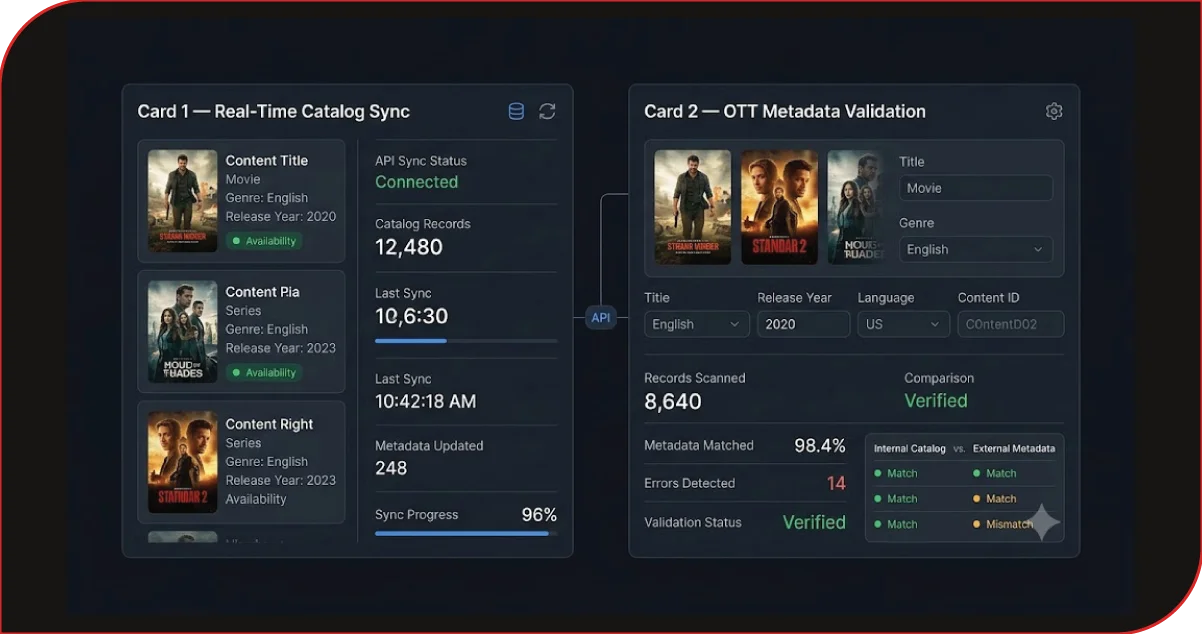
Managing multi-region digital asset libraries requires precise coordination between ingestion pipelines and user-facing applications. Inefficient catalog updates often lead to missing metadata, incorrect asset categorization, and frustrating end-user experiences. To maintain continuous operational synchronization, Real-Time OTT Catalog Synchronization Using APIs automates the ingestion and distribution of media assets, guaranteeing that viewers always access the most current programming catalogs without manual database refreshes.
Furthermore, implementing OTT Web Scraping for Metadata Analysis allows technical staff to cross-reference third-party assets with internal database standards securely. Automated validation checks eliminate human entry errors across large media vaults.
| Workflow Stage | Traditional Method | API-Integrated Method | Efficiency Gain |
|---|---|---|---|
| Catalog Ingestion | Manual CSV uploads | Automated webhook ingestion | 85% faster processing |
| Metadata Audit | Periodic human review | Continuous automated scraping | Real-time discrepancy alerts |
| Platform Syncing | Batch updates daily | Instant event-driven sync | Zero propagation delay |
Recent industry reports indicate that media platforms utilizing automated catalog synchronization reduce content deployment errors by over forty percent. Statistical analysis shows that automated workflows decrease average asset publishing times from four hours to less than ten minutes.
- Synchronize global media catalogues instantly across multiple user end-points and connected devices.
- Eliminate human data entry errors using automated webhook validation and verification protocols.
- Accelerate time-to-market for newly acquired video assets and localized dubbing tracks.
- Maintain rigorous metadata consistency across web browsers and mobile application interfaces.
Evaluating Market Dynamics and Competitor Content Strategies Effectively
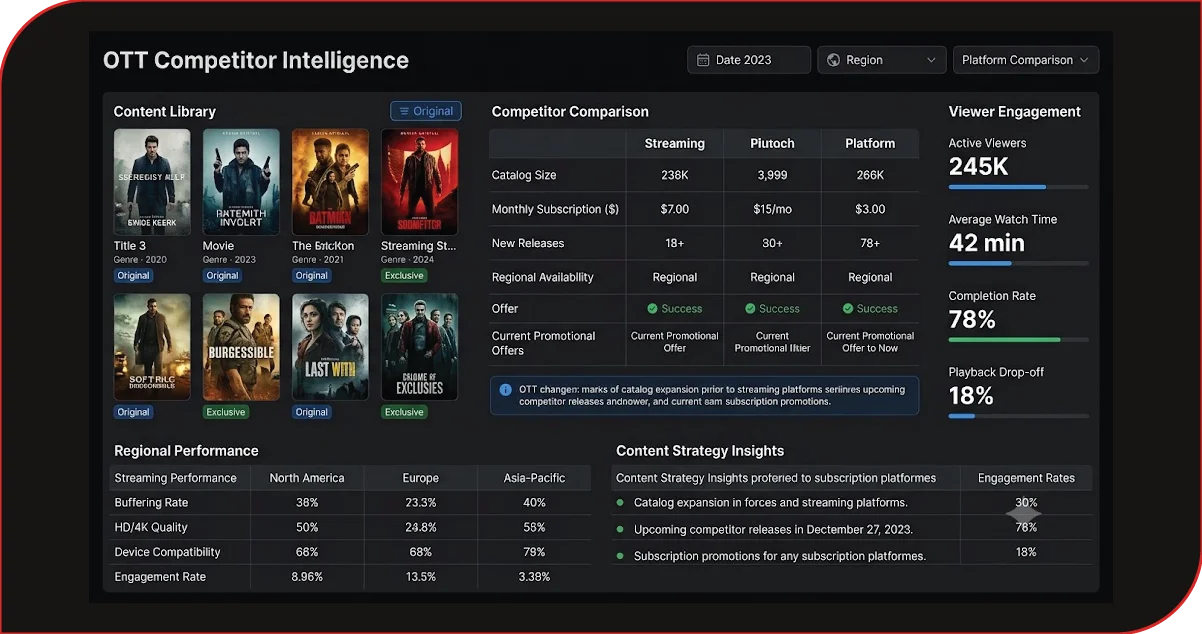
Understanding audience consumption habits requires continuous collection and interpretation of playback performance metrics, engagement rates, and drop-off points. Without granular visibility into viewer behavior, content acquisition teams struggle to allocate budgets effectively. When conducting OTT Competitor Data Analysis, strategic planners evaluate rival library sizes, pricing tiers, and regional release schedules accurately.
Detailed performance dashboards provide actionable insights into buffering rates, stream quality variations, and device compatibility issues across diverse geographic markets. Technical departments acquire granular datasets detailing competitor catalog expansions and promotional strategies to inform targeted marketing campaigns and subscriber retention initiatives.
| Metric Category | Industry Average | Top-Tier Platform | Impact on Retention |
|---|---|---|---|
| Initial Play Start Time | 2.1 seconds | 0.8 seconds | Lower abandonment rates |
| Catalog Completeness | 92% | 99% | Higher user satisfaction |
| Pricing Competitiveness | Regional parity | Dynamic tiered pricing | Improved conversion rates |
Data-driven decision-making directly correlates with long-term subscriber loyalty and reduced churn rates. Platforms that continuously monitor viewing patterns and market dynamics can adjust their content recommendations algorithms dynamically. Statistical models demonstrate that personalized content carousels driven by integrated analytics improve average daily watch times by nearly thirty percent.
In addition, utilizing an OTT Content Web Data Scraper for Streaming Analytics helps organizations track viewer engagement patterns across competitive services without manual tracking. Monitoring these external metrics ensures proactive adaptation to shifting audience preferences.
- Track audience engagement metrics and playback performance variations across different network environments.
- Monitor rival platform content acquisition trends to identify emerging genre preferences early.
- Evaluate streaming quality metrics across global geographic regions to optimize content delivery networks.
- Refine recommendation algorithms using comprehensive viewer behavior datasets and drop-off analysis.
Streamlining Revenue Models Through Advanced Pricing Intelligence Systems
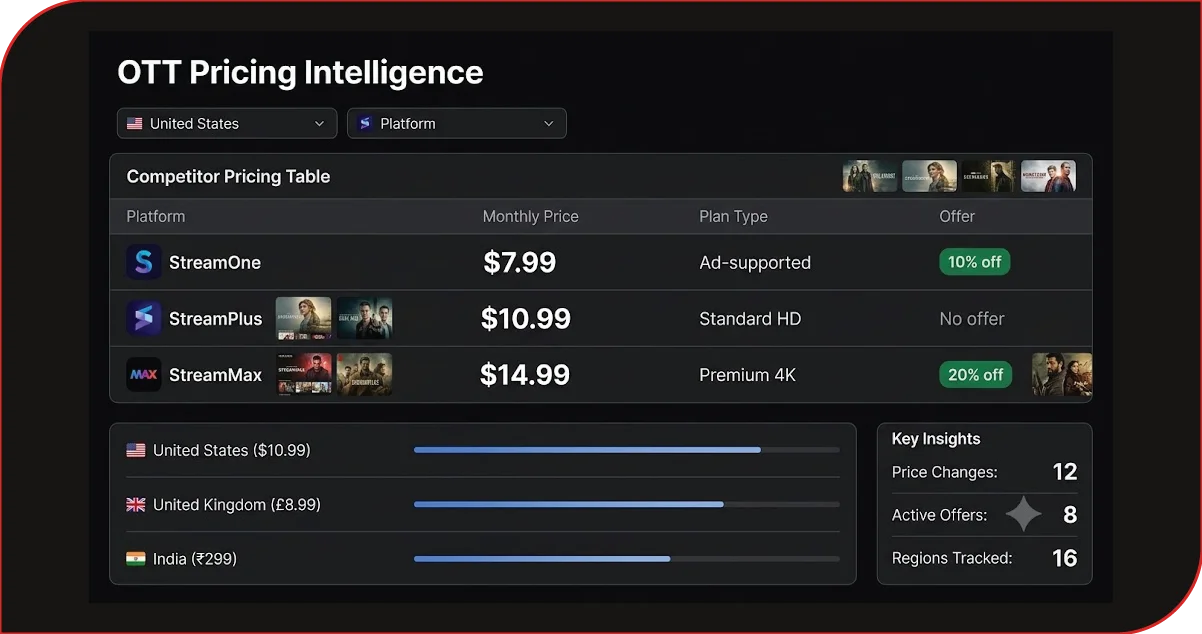
Modern monetization models extend far beyond standard monthly subscription fees to include transactional video-on-demand, advertising-supported tiers, and hybrid bundling strategies. Determining optimal pricing structures requires continuous evaluation of macroeconomic trends and consumer willingness to pay across different territories. Financial analysts track competitor pricing adjustments and promotional discounts in real-time to maintain competitive positioning.
Subscription fatigue has made pricing agility a critical survival factor for emerging and established streaming services alike. When operators Extract OTT Pricing and Availability Data, they gain the exact market intelligence needed to refine promotional offers, trial periods, and tier structures. This empirical approach prevents underpricing premium content while avoiding overpricing in developing regional markets.
| Pricing Strategy | Market Penetration | Revenue Impact | Churn Risk |
|---|---|---|---|
| Flat-Rate Subscription | High | Stable baseline | Moderate |
| Ad-Supported Tier | Rapid growth | High ad-yield potential | Low |
| Dynamic Regional Pricing | Optimized | Maximized yield | Minimal |
Market research reveals that platforms leveraging automated pricing intelligence capture up to fifteen percent higher average revenue per user than competitors relying on static pricing models. Comprehensive data pipelines ensure finance departments can adapt to changing economic conditions swiftly.
Moreover, utilizing an OTT Platform Data Scraping Essential for Streaming Analytics solution ties billing gateways directly to usage analytics, creating a resilient financial operational framework for enterprise growth.
- Analyze macroeconomic indicators and local purchasing power to establish optimal regional pricing models.
- Monitor promotional trial conversions and discount effectiveness across competing streaming services continuously.
- Adjust subscription tier pricing dynamically based on real-time market demand and churn indicators.
- Integrate automated billing triggers with usage analytics to streamline financial reporting and revenue forecasting.
How OTT Scrape Can Help You?
In the fast-moving digital media industry, accurate market intelligence is essential for staying competitive. OTT API Integration for Streaming Platforms simplifies data collection across global streaming services, reducing manual effort and helping analytics teams access timely insights.
Organizations utilize these technical capabilities to transform raw internet data into strategic assets that guide executive decision-making and content acquisition budgets.
- Collect comprehensive metadata across multiple global video libraries without manual intervention
- Monitor promotional pricing strategies and subscription tier changes across competing networks in real-time
- Identify regional content gaps and licensing opportunities before competitors enter the market
- Automate the extraction of user review sentiments and platform feature updates continuously
- Streamline market research workflows to reduce analysis overhead and accelerate strategic planning
- Integrate structured competitor datasets directly into internal business intelligence and reporting dashboards
Automated data collection solutions provide a reliable mechanism to monitor competitor offerings, track regional pricing shifts, and analyze content libraries at scale. Implementing Scrape OTT Content Availability for Market Research allows your enterprise to uncover hidden industry trends and capitalize on shifting consumer demands efficiently.
Conclusion
Navigating the complexities of modern digital distribution requires robust technological foundations that connect fragmented workflows and elevate operational transparency. Deploying OTT API Integration for Streaming Platforms ensures that your media network maintains seamless data synchronization across every device and regional market.
Strategic leaders recognize that continuous access to competitive intelligence is essential for long-term profitability and audience retention. Utilizing Real-Time OTT Catalog Synchronization Using APIs empowers your organization to deliver exceptional viewing experiences while scaling operations effortlessly. Contact OTT Scrape and start transforming your digital streaming infrastructure today by scheduling a consultation with our media technology integration specialists.