
Introduction
The streaming industry changes rapidly as platforms continuously refresh their libraries, introduce regional variations, and adjust title availability. Our Netflix Content Data Extraction for Competitive Analysis solution helped organize title-level information such as movies, TV shows, genres, release years, languages, ratings, and availability into a structured intelligence framework, giving analysts a clearer view of how Netflix's catalog evolved across different territories.
The client also required reliable data to evaluate content depth, category distribution, and regional catalog differences without depending on repetitive manual research. Through Netflix Catalog Data Scraping for Market Research, we collected and standardized relevant catalog attributes from targeted markets, allowing their research teams to compare content patterns, identify underserved categories, and assess changes in platform positioning.
To support continuous monitoring and integration with their internal analytics environment, we developed Netflix Data Scraping Services around their specific collection requirements. The workflow incorporated scheduled extraction, data validation, field normalization, duplicate handling, and structured delivery, helping the client maintain consistent records as catalog information changed. This provided their teams with a dependable foundation for tracking content movements, preparing market reports, and making more informed decisions around streaming platform strategy.
The Client
The client was a global entertainment intelligence company that supported streaming businesses with competitive benchmarking, content research, and market evaluation. Their analysts needed a dependable way to examine Netflix's expanding catalog across different countries, but their existing research depended heavily on manual checks and disconnected data sources. This made it challenging to maintain consistent records, identify catalog changes promptly, and understand how content availability varied between markets.
Their primary requirement was to establish a reliable catalog intelligence workflow capable of capturing title details, genres, release information, languages, ratings, and market-specific availability. With OTT Content Availability Dataset for Analytics, the client could organize these attributes into a consistent analytical structure and compare content coverage across selected territories. The resulting dataset helped their research teams identify catalog strengths, recognize content gaps, and evaluate changing availability patterns without repeatedly gathering information through manual processes.
Our objective was to create a more dependable foundation for streaming market intelligence. The solution needed to accommodate changing content libraries, regional differences, and varied metadata while remaining practical for our existing analytics workflow. Most importantly, we needed data that could help transform catalog observations into meaningful competitive insights and support more confident strategic decisions.
Key Challenges

The client's earlier monitoring relied on periodic manual checks, making it difficult to track a constantly changing streaming library accurately. Regional availability, shifting metadata, and frequent catalog updates often caused inconsistencies across records. By incorporating Netflix Movie Datasets into a more systematic process, analysts could better distinguish temporary changes from regional variations and broader catalog trends, while preparing competitive reports faster and with greater confidence.
Another challenge emerged when the team attempted to compare movies and television programs across multiple territories. Differences in content structures and availability indicators made normalization difficult, while missing records could affect the accuracy of broader comparisons. The absence of a dependable Scrape Netflix Movies and TV Shows Availability Comparison workflow in the middle of their research process meant analysts often had to reconcile information manually before drawing conclusions.
Audience response presented another analytical gap because review-related information was not easily aligned with catalog attributes. Their existing process lacked a consistent Netflix Movie Review Data Scraping for Analysis method for bringing these signals together. As a result, analysts had limited visibility into the relationship between catalog presence and audience response, restricting the depth of their competitive assessments.
Key Solutions
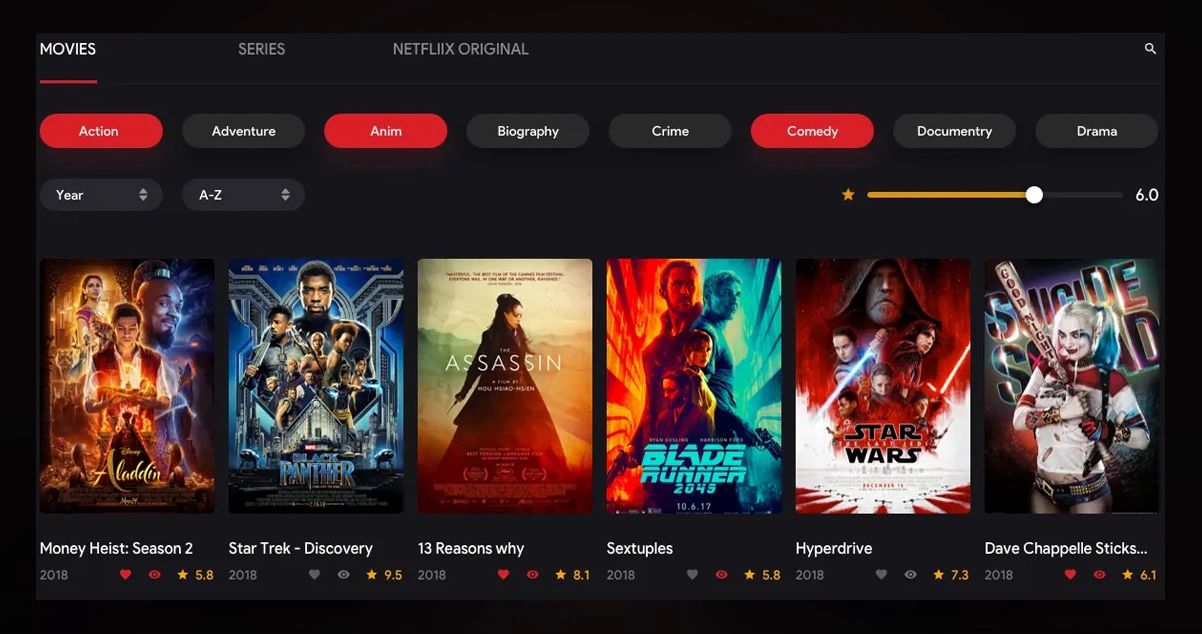
We developed a customized extraction framework designed around the client's need for reliable, repeatable catalog monitoring across selected markets. The workflow captured relevant title attributes and organized them into standardized records before they entered the client's analytical environment. During processing, Netflix TV Show Availability Data Scraping was incorporated into the middle of the workflow to maintain dedicated television records and make TV-specific availability patterns easier to evaluate alongside broader catalog information.
The solution also introduced validation and normalization layers to improve consistency across collected records. Each dataset was checked for incomplete fields, duplicate entries, inconsistent values, and formatting variations before delivery. Within this workflow, Netflix Catalog Data Scraping for Market Research supported the client's efforts to compare content categories, regional coverage, release patterns, and catalog movements using standardized information rather than disconnected observations.
To make the collected information more useful beyond individual reporting cycles, we established a structured delivery process that could support ongoing analysis and historical comparisons. By integrating Scrape TV Shows Data capabilities into the broader workflow, the client could maintain more organized records for television-focused analysis while continuing to evaluate wider platform trends through a unified data environment.
Measurable Gains From A More Consistent Streaming Data Foundation
| Metric | Before | After | Improvement | Status |
|---|---|---|---|---|
| Manual Monitoring Time | 100% | 25% | 75% ↓ | Optimized |
| Data Processing Speed | 1x | 3.5x | 250% ↑ | Accelerated |
| Record Accuracy | 82% | 97% | 15% ↑ | Improved |
| Update Detection | 48 hrs | 6 hrs | 87.5% ↓ | Accelerated |
| Reporting Efficiency | 1x | 3x | 200% ↑ | Enhanced |
The measurable improvements gave the client a stronger foundation for continuous catalog assessment and faster competitive reporting. Their analysts could Extract Netflix Catalog Data for Content Intelligence and convert frequently changing title-level information into structured insights for market benchmarking, content planning, and regional opportunity assessment.
The improved workflow also reduced repetitive validation and accelerated access to comparable records across selected territories. With Netflix TV Show Availability Data Scraping, the client could examine television-focused catalog movements more consistently while maintaining a broader view of platform changes and content positioning.
Advantages of Collecting Data Using OTT Scrape
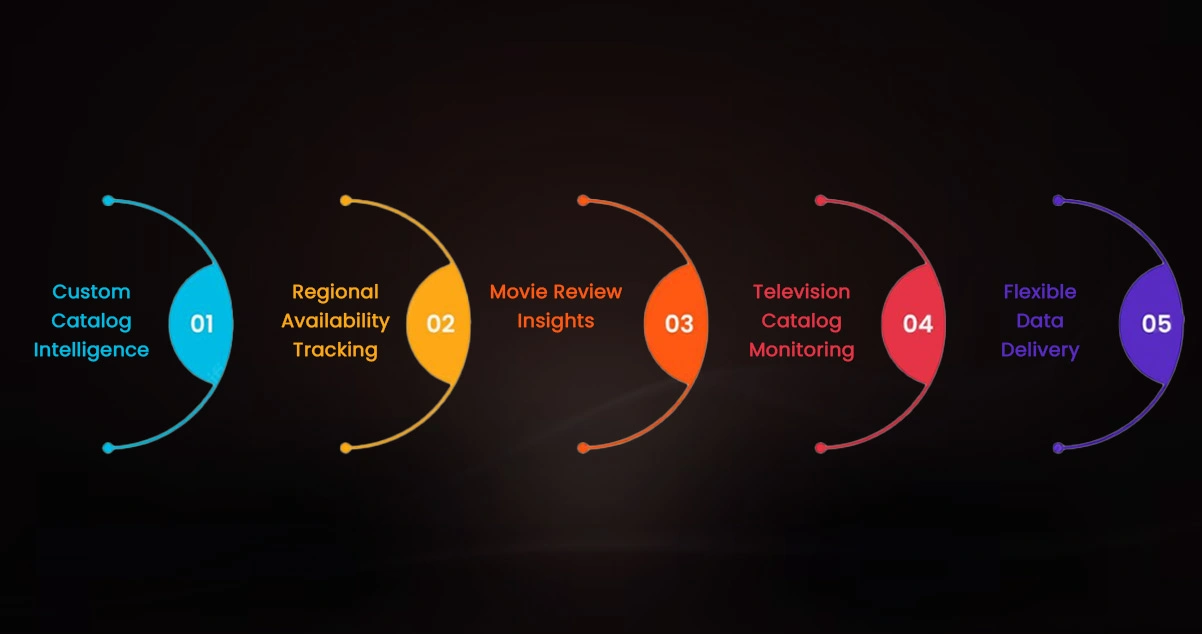
- Custom Catalog Intelligence
We provide Netflix Content Data Extraction for Competitive Analysis solutions that organize title metadata, availability details, genres, languages, ratings, and regional information for benchmarking. - Regional Availability Tracking
Our OTT Content Availability Dataset for Analytics helps businesses compare regional catalogs, monitor title changes, identify content gaps, and evaluate platform coverage. - Movie Review Insights
Through Netflix Movie Review Data Scraping for Analysis, we organize review signals, ratings, audience feedback, and title information for deeper content performance assessment. - Television Catalog Monitoring
Our Netflix TV Show Availability Data Scraping captures structured television metadata, availability changes, genres, release details, and regional variations for ongoing catalog evaluation. - Flexible Data Delivery
We support Netflix Catalog Data Scraping for Market Research with validated, structured outputs that integrate smoothly into dashboards, analytical platforms, and recurring research workflows.
Client's Testimonial
Conclusion
The completed solution provided the client with a reliable way to evaluate Netflix's changing content landscape across selected markets. Analysts could compare title availability, content categories, regional variations, and audience response patterns through structured data, reducing repetitive manual research and supporting clearer competitive assessments. By incorporating Netflix Content Data Extraction for Competitive Analysis into the workflow, the organization could identify catalog gaps, compare market movements, and build a stronger foundation for ongoing streaming intelligence.
The project also created a scalable approach for monitoring television-specific trends alongside broader catalog changes, helping teams improve reporting accuracy and strategic interpretation. With Netflix TV Show Availability Data Scraping integrated into the process, analysts could perform faster comparisons and make more informed content decisions across targeted markets. Contact OTT Scrape today to discuss your Netflix data requirements and create a customized OTT scraping solution aligned with your competitive intelligence goals.