
Introduction
The rapid growth of Counter-Strike 2 has created a strong demand for structured competitive data that can support deeper player evaluation and performance benchmarking. Our HLTV Data Scraping for Player Performance Analysis solution helped a leading esports analytics company transform scattered competitive information into a reliable data pipeline. The system gathered player statistics, match records, team details, event information, and performance indicators, giving analysts a centralized foundation for studying individual and team-level trends across different competitive periods.
As the client's coverage expanded, they needed a dependable process for collecting and organizing match-level information without relying on repetitive manual research. Our HLTV Data Scraping for CS2 Match Analytics workflow automated the retrieval and structuring of relevant match information, allowing analysts to examine scores, results, player contributions, map-level statistics, and other competitive attributes through standardized datasets.
The scalable infrastructure enabled the client to build performance dashboards, compare players and teams, and track tournament developments more efficiently. By integrating Web Scraping HLTV Team Rankings for Market Research, automated processing reduced repetitive data preparation and improved access to analysis-ready records. This flexible setup also supported future expansion while maintaining consistent and usable data for research and reporting.
The Client
The client was a growing esports analytics organization focused on building a reliable intelligence platform for Counter-Strike 2 competitions. Their analysts worked with player statistics, match results, tournament records, team information, and ranking movements to develop performance reports and comparative insights. Our CS2 Tournament Data Extraction From HLTV solution addressed this requirement by organizing event-level information into standardized datasets that could support recurring research and reporting activities.
The organization also wanted to strengthen its player evaluation capabilities by bringing different performance indicators into a unified analytical environment. We introduced HLTV Data Scraping for Player Performance Analysis to help consolidate relevant statistics and competitive records into an organized pipeline. This gave their analysts a more efficient way to examine player contributions, compare performance across matches, and identify meaningful changes over time without depending on fragmented manual research processes.
Although the client's primary requirement centered on CS2 esports intelligence, their broader data strategy included building reusable approaches for collecting structured information from different digital sources. This included exploring datasets such as Amazon Prime Movie Datasets for separate content intelligence initiatives, where structured information could support catalog analysis, trend research, and comparative studies. The emphasis remained on creating flexible data workflows that could accommodate different schemas while maintaining consistency, accuracy, and usability for downstream analytics.
Key Challenges
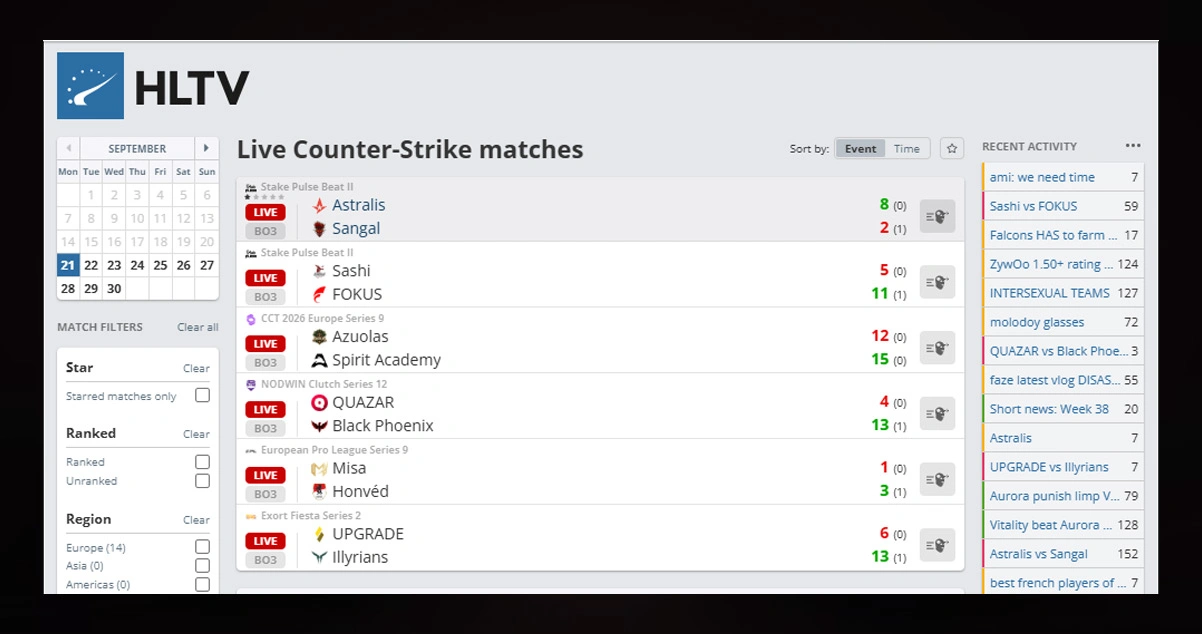
As the client's CS2 coverage grew, manually collecting player statistics, match results, tournament details, and team records became increasingly time-consuming. Analysts had to review multiple pages and repeatedly verify data before adding it to internal datasets. To manage the growing event volume, HLTV Data Scraping for CS2 Match Analytics & Insights became essential for building a reliable and repeatable data collection workflow.
Another major challenge was the inconsistent organization of information across different competitive events. Tournament pages contained varying details related to stages, participating teams, match schedules, and results, while frequent updates required analysts to revisit existing records. Their previous workflow lacked the scalability needed for Web Scraping HLTV Data for Esports Analytics, leaving analysts dependent on manual validation and repetitive data preparation before information could be used for performance research.
The client also faced difficulties when evaluating team movements and competitive positioning over extended periods. Ranking information needed to be captured consistently so analysts could compare changes between tournaments and identify broader competitive patterns. The absence of a dedicated workflow for HLTV Team Ranking Data Scraping for Analytics limited their ability to incorporate ranking trends efficiently into player, team, and tournament performance studies.
Key Solutions
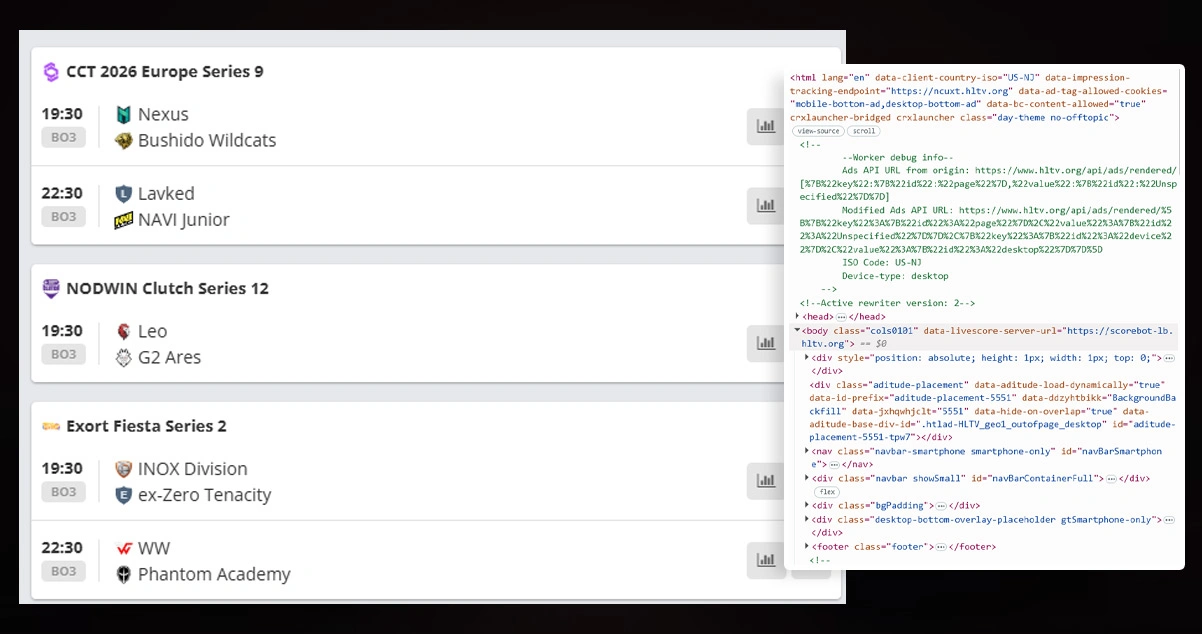
We developed a scalable extraction architecture designed around the client's growing CS2 analytics requirements. The system collected relevant player, match, team, and event information and converted source records into standardized structures suitable for downstream analysis. By incorporating HLTV Data Scraping for Player Performance Analysis into the workflow, the client gained a more organized foundation for evaluating individual performance across competitive matches and events.
To improve tournament intelligence, we created dedicated extraction workflows capable of identifying event names, stages, participating teams, dates, match outcomes, and related competitive attributes. This approach allowed analysts to compare tournaments more efficiently and maintain a more complete historical repository. The implementation of CS2 Tournament Data Extraction From HLTV also gave the client greater flexibility to expand coverage as new competitions and events were added.
We further strengthened the pipeline by introducing automated ranking and match-data processing capabilities. The architecture was designed to handle increasing volumes without requiring proportional growth in manual processing, while scheduled workflows helped keep datasets refreshed. With HLTV Data Scraping for CS2 Match Analytics integrated into the broader system, the client could work with structured competitive information more efficiently and develop a stronger foundation for ongoing CS2 intelligence initiatives.
A Compact View of Collected CS2 Data Benchmarks
| Metric | Volume | Accuracy | Refresh | Coverage |
|---|---|---|---|---|
| Players | 18,500+ | 98.7% | 15 min | 42 |
| Matches | 76,000+ | 99.1% | 10 min | 38 |
| Tournaments | 1,250+ | 98.9% | 30 min | 31 |
| Teams | 3,400+ | 99.2% | 20 min | 44 |
| Rankings | 52,000+ | 99.4% | 1 hr | 46 |
The collected datasets gave the client's analysts a clearer foundation for comparing competitive activity across players, teams, and tournaments. The structured workflow also created opportunities to extend Scrape Popular Sports Data capabilities into broader sports intelligence projects while keeping the CS2 dataset consistent and analysis-ready.
The standardized records reduced the effort required to prepare recurring reports and enabled faster access to match and tournament information. With HLTV Data Scraping for CS2 Match Analytics incorporated into the data pipeline, analysts could work with refreshed records more efficiently and support performance-focused decisions with organized competitive data.
Advantages of Collecting Data Using OTT Scrape
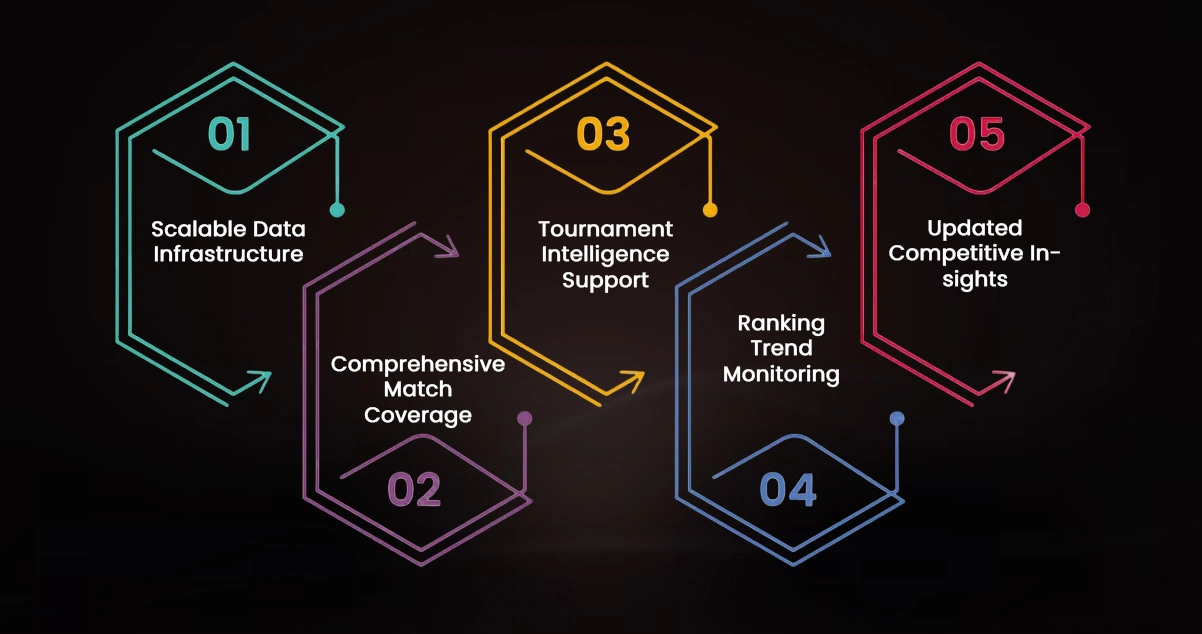
- Scalable Data Infrastructure
Our HLTV Data Scraping for Player Performance Analysis solutions provide scalable pipelines for organizing player statistics, match records, tournament details, and performance indicators across growing CS2 datasets. - Comprehensive Match Coverage
Using CS2 Match Data Scraping From HLTV, we capture structured match information, scores, player contributions, maps, and outcomes to support consistent competitive performance analysis. - Tournament Intelligence Support
Our CS2 Tournament Data Extraction From HLTV workflows organize event schedules, stages, participating teams, and results, helping analysts compare competitive performance across tournaments efficiently. - Ranking Trend Monitoring
Through HLTV Team Ranking Data Scraping for Analytics, businesses can maintain structured ranking histories, monitor competitive movements, and strengthen team comparison workflows with regularly refreshed records. - Updated Competitive Insights
Our flexible infrastructure supports Scrape Latest Releases Data workflows alongside esports datasets, helping teams maintain timely information and expand their analytical coverage across evolving competitive content.
Client's Testimonial
Conclusion
The completed pipeline transformed the client's fragmented research process into a structured and scalable CS2 analytics environment. Teams could efficiently work with player, match, tournament, and ranking data through consistent datasets, while HLTV Data Scraping for Player Performance Analysis supported reliable evaluations and reduced repetitive manual collection efforts.
By integrating HLTV Data Scraping for CS2 Match Analytics into the broader workflow, the client established a stronger foundation for dashboards, player comparisons, match analysis, and future esports research. Contact OTT Scrape to build a scalable data pipeline tailored to your CS2 analytics requirements.