
Introduction
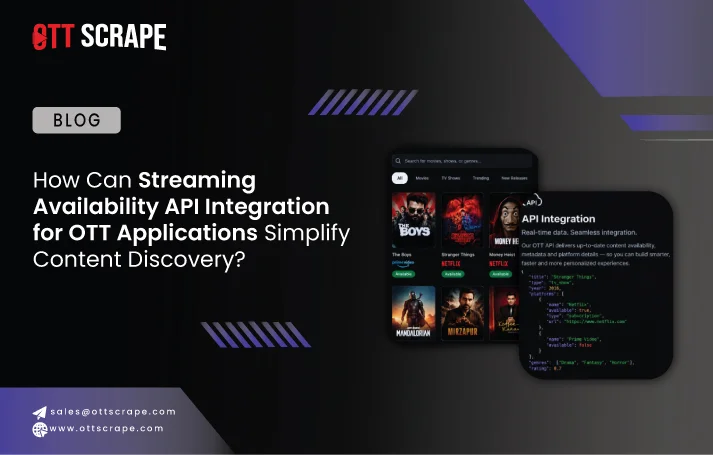
Streaming platforms compete on more than content volume. Viewers expect accurate titles, genres, ratings, cast information, availability, and platform details within seconds. Streaming Availability API Integration for OTT Applications helps OTT services connect structured catalog information with their interfaces, reducing manual data handling and improving the overall content discovery experience.
A centralized availability layer can bring together information from multiple streaming services while keeping catalog details organized. This makes it easier for applications to present relevant titles, identify where content is available, and maintain consistent metadata. It also supports Scrape Data From Popular OTT Platform Apps when broader market information is required.
For OTT businesses, reliable data connections can improve search, recommendation workflows, catalog management, and availability tracking. API-based integration also reduces repetitive development work by providing structured information that applications can process efficiently. As streaming libraries continue expanding, timely catalog updates become increasingly important for maintaining useful and responsive discovery experiences.
Real-Time Catalog Connections Improve OTT Content Discovery
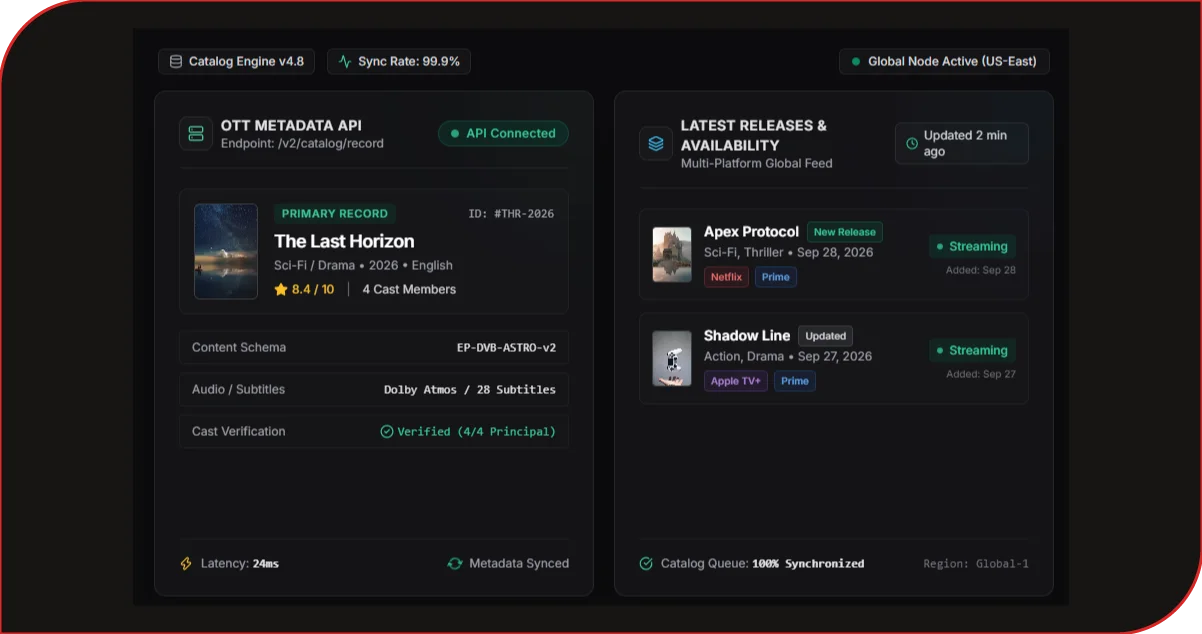
Modern OTT applications manage extensive libraries containing titles across genres, languages, release periods, and streaming services. Keeping this information accurate requires a structured data flow that can collect, organize, and transfer records efficiently. OTT Metadata API for Streaming Applications can support this process by supplying standardized information such as title names, genres, release years, cast details, ratings, and availability.
Availability information is particularly important because streaming catalogs change frequently. Titles can be added, removed, relocated, or updated across services, making outdated records less useful for viewers. For example, teams can combine availability records with Scrape Latest Releases Data to identify newly introduced titles and refresh catalog sections. This creates a more responsive content environment while helping businesses maintain organized records for search, filtering, and content management activities.
Structured catalog connections can also improve how applications process content attributes. Instead of maintaining separate data structures for each service, teams can normalize information into consistent fields and formats. A standardized workflow gives technical teams a clearer foundation for managing growing content libraries without repeatedly redesigning the same application processes.
Several catalog elements can contribute to a smoother discovery workflow:
- Title and release information
- Genre and category attributes
- Cast and creator details
- Ratings and review information
- Platform availability records
- Language and regional details
| Data Element | Application Benefit |
|---|---|
| Title details | Consistent search results |
| Genre information | Better content filtering |
| Availability | Accurate platform visibility |
| Release dates | Timely catalog updates |
As OTT catalogs continue expanding, efficient data synchronization becomes increasingly important. Applications that depend on fragmented or manually maintained records may require more operational effort to keep information current. This approach supports better content visibility while giving product and development teams more flexibility to build search and discovery functions around reliable, organized records.
Unified Streaming Data Supports Smarter Viewer Experiences
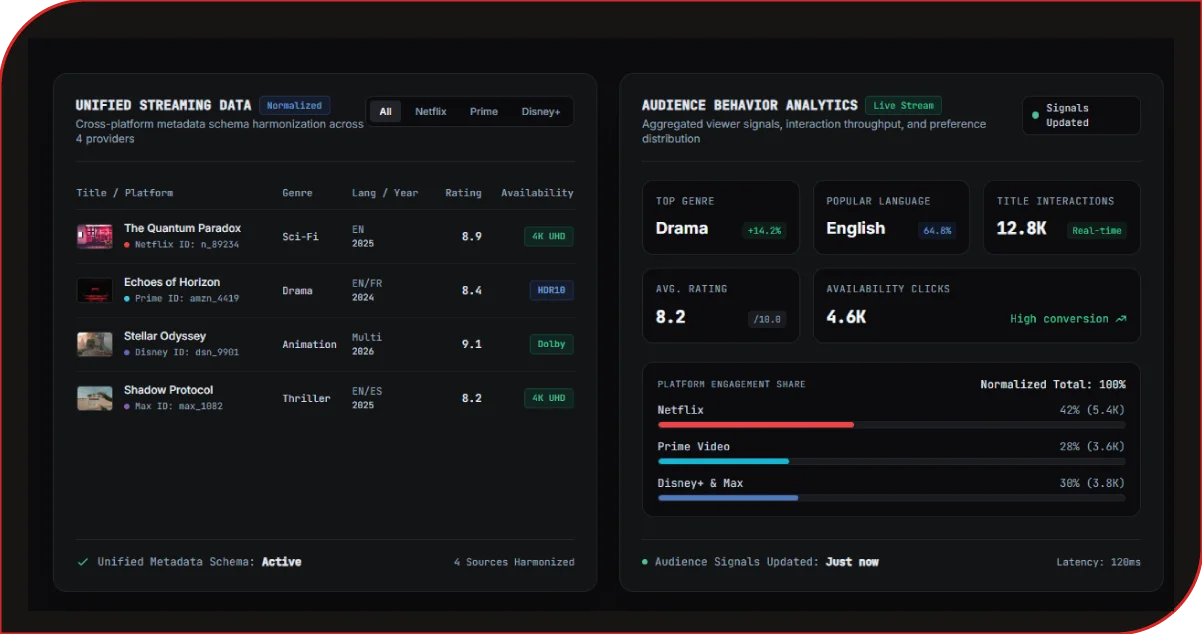
Content discovery becomes more complicated when viewers use several streaming services to find entertainment. Each platform may organize titles differently, use separate metadata structures, and update availability at different intervals. OTT Streaming Data API Integration for Applications can bring relevant information into a unified workflow, allowing applications to organize titles according to common attributes.
A unified data structure can also make audience behavior analysis more practical. Teams can examine interactions with titles, genres, ratings, and availability when suitable data is collected and organized for analytical purposes. OTTplay Audience Behavior Analytics Using Web Scraping can complement these workflows by providing additional behavioral signals for understanding how audiences interact with streaming content.
Combining catalog information with audience-oriented analytics creates opportunities for more informed product development. Content teams can also identify patterns across genres, languages, release periods, and platforms. Rather than treating each streaming service as an isolated source, businesses can establish a common framework that makes information easier to compare, analyze, and integrate into their existing technology environment.
A unified discovery workflow can support several practical activities:
- Cross-platform content organization
- Genre and language filtering
- Audience preference analysis
- Availability comparison
- Search experience refinement
- Recommendation workflow support
| Data Category | Possible Use |
|---|---|
| Viewing preferences | Recommendation refinement |
| Ratings | Content filtering |
| Platform availability | Service comparison |
| Genre activity | Audience segmentation |
The value of unified streaming information becomes more apparent as application libraries grow. A centralized approach can simplify these processes by establishing common fields and repeatable workflows. This gives businesses a practical foundation for maintaining content information while supporting viewer-facing features that depend on accurate and organized catalog records.
Scalable API Workflows Strengthen OTT Catalog Management
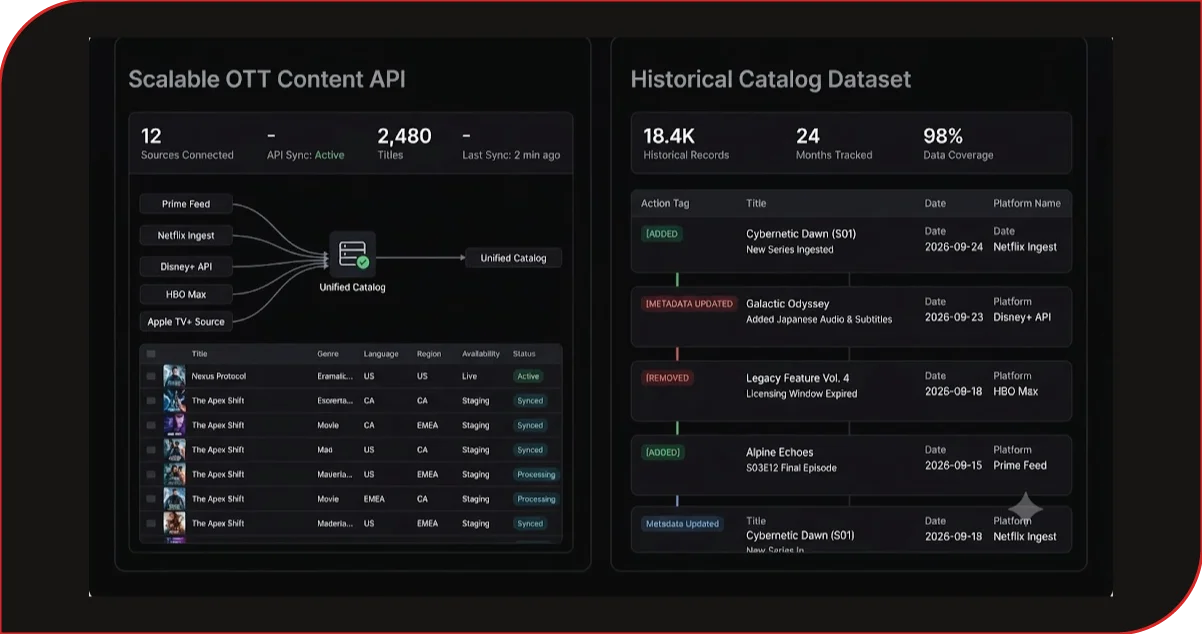
Growing OTT libraries require systems that can process changing information without creating excessive operational workloads. Streaming applications may need to handle title additions, removals, metadata changes, regional differences, and platform-specific availability. OTT Content API Integration for Streaming Platforms can connect these content records with application components such as search, filtering, recommendations, and catalog management.
Scalability becomes particularly important when businesses expand the number of streaming sources they monitor or support. A system designed around standardized data structures can accommodate additional sources without requiring every application component to be rebuilt. As content libraries become increasingly dynamic, scalable architecture provides a foundation for handling changes without adding unnecessary manual operations.
Historical information can further strengthen catalog analysis by allowing businesses to examine how streaming libraries evolve over time. Datasets containing structured title, availability, category, and release information can support reporting and analytical workflows. Teams may use historical records to identify catalog changes, compare content categories, study release patterns, or evaluate platform-level trends.
A scalable catalog workflow can assist with:
- Automated catalog synchronization
- Availability monitoring
- Content categorization
- Historical catalog analysis
- Structured reporting
- Multi-source data management
| Workflow | Operational Value |
|---|---|
| Catalog synchronization | Reduces manual updates |
| Availability tracking | Improves information accuracy |
| Content filtering | Simplifies user navigation |
| Historical analysis | Supports trend evaluation |
Scalable systems ultimately help OTT teams maintain greater consistency as their applications and data requirements expand. Instead of relying on disconnected collection processes, businesses can establish repeatable workflows for gathering, validating, storing, and distributing catalog information. This makes it easier to introduce additional sources, enhance discovery functionality, and support analytics requirements while keeping the underlying content management structure organized and adaptable.
How OTT Scrape Can Help You?
Streaming applications require reliable information to keep their catalogs useful and responsive. Streaming Availability API Integration for OTT Applications can help OTT businesses connect structured availability information with applications, dashboards, search systems, and catalog workflows. We can support the collection and organization of relevant streaming data so development and analytics teams can work with consistent information.
Its data workflows can support catalog monitoring, availability tracking, content categorization, and other requirements where regularly updated streaming information is important. Collected information can also be prepared according to the format required by internal systems, dashboards, or analytical applications.
Key areas of support include:
- Automated collection of relevant OTT catalog information
- Structured organization of title and platform details
- Availability monitoring across selected streaming services
- Regular updates for changing catalog information
- Data preparation for analytics and reporting workflows
- Integration-ready outputs for business applications
A structured approach can make streaming information easier to maintain as platforms add, remove, or modify titles. It can also reduce the operational effort involved in gathering information from multiple sources. OTT Data API for Content Discovery Applications can further connect these structured records with application-level discovery features and broader content workflows.
Conclusion
By organizing changing content data into usable application workflows, OTT businesses can reduce manual catalog maintenance and provide clearer information to their audiences. Streaming Availability API Integration for OTT Applications provides a structured approach to connecting streaming catalog information with search, filtering, recommendation, and availability features.
For teams working with multiple streaming sources, OTT Metadata API for Streaming Applications can further support consistent content organization and application functionality. A well-planned data pipeline can make catalog updates easier to manage while supporting scalable discovery features. Contact OTT Scrape today to build reliable streaming data workflows for your OTT application and simplify content catalog management.