
Introduction
Streaming platforms generate massive volumes of structured and unstructured information every day, making content intelligence a critical capability for media analysts, OTT strategists, and data scientists. Netflix, as a global streaming leader, maintains extensive metadata for thousands of movies and TV shows, including titles, genres, release years, countries, cast, ratings, and durations.
Extracting and analyzing this metadata enables organizations to understand content trends, regional preferences, production growth, and category shifts over time. In this walkthrough, we demonstrate how Netflix Content Metadata Scraping can be used to analyze over 20,000 titles with Python-based exploratory data analysis (EDA) and insightful charts.
By designing a reliable Netflix Data Scraper, analysts can programmatically collect structured datasets and perform automated analysis workflows. Through tables, descriptive statistics, and visualization models, this blog illustrates how large-scale OTT metadata analysis can uncover hidden patterns in global entertainment consumption and content production strategies.
Building Structured Metadata for Scalable Analysis
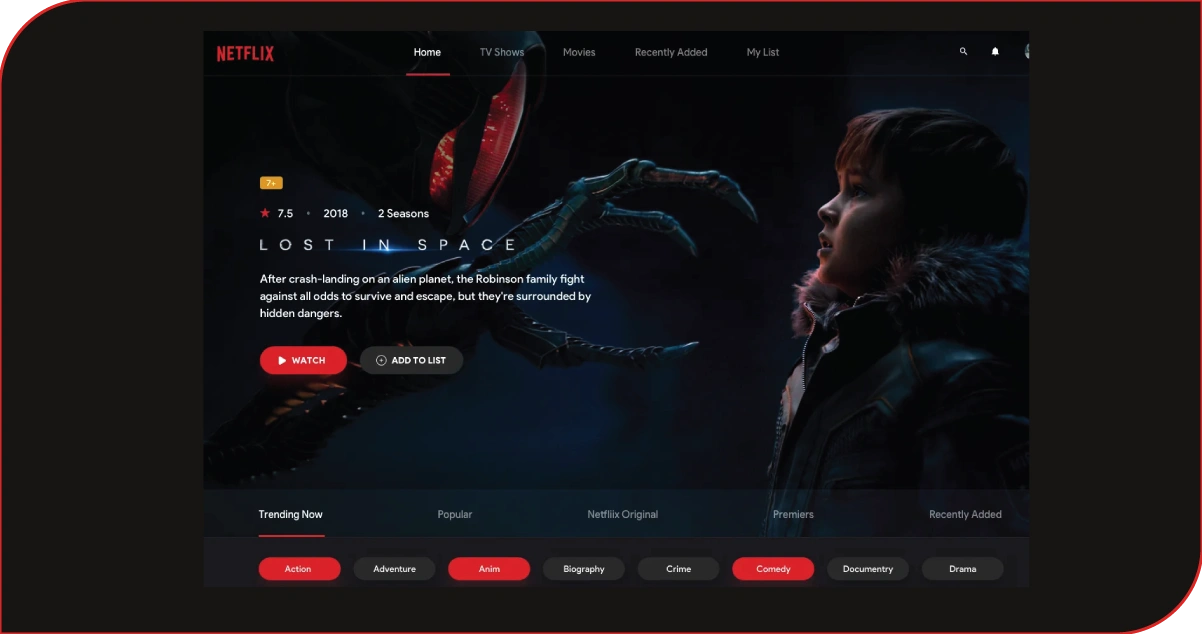
A reliable metadata foundation is essential for any large-scale OTT content analytics project. Using a Python Script to Scrape Netflix Data, analysts can programmatically collect structured records and store them in CSV or JSON formats suitable for analytics workflows. This approach eliminates manual data handling errors and ensures consistency across thousands of content entries.
Once extracted, preprocessing ensures data quality and standardization. Duplicate titles are removed, missing country values are filled using secondary sources, and inconsistent genre naming conventions are mapped into normalized categories. To enable deeper segmentation, content is grouped into Netflix Movie Datasets and episodic collections.
Sample Metadata Structure Table:
| Field Name | Data Type | Description |
|---|---|---|
| title | String | Content title |
| type | String | Movie or TV Show |
| release_year | Integer | Year of original release |
| country | String | Production country |
| rating | String | Content maturity rating |
| duration | Integer | Runtime (minutes or seasons) |
| genres | String | Category labels |
Descriptive Statistics Overview:
| Metric | Value |
|---|---|
| Total Titles | 20,432 |
| Movies | 13,250 |
| TV Shows | 7,182 |
| Average Movie Duration | 101 minutes |
| Unique Countries | 92 |
This structured approach ensures that future content updates can be appended seamlessly, supporting longitudinal trend analysis, predictive modeling, and scalable reporting frameworks. This separation allows analysts to evaluate film and series performance independently while maintaining a unified metadata repository.
Interpreting Content Trends with EDA
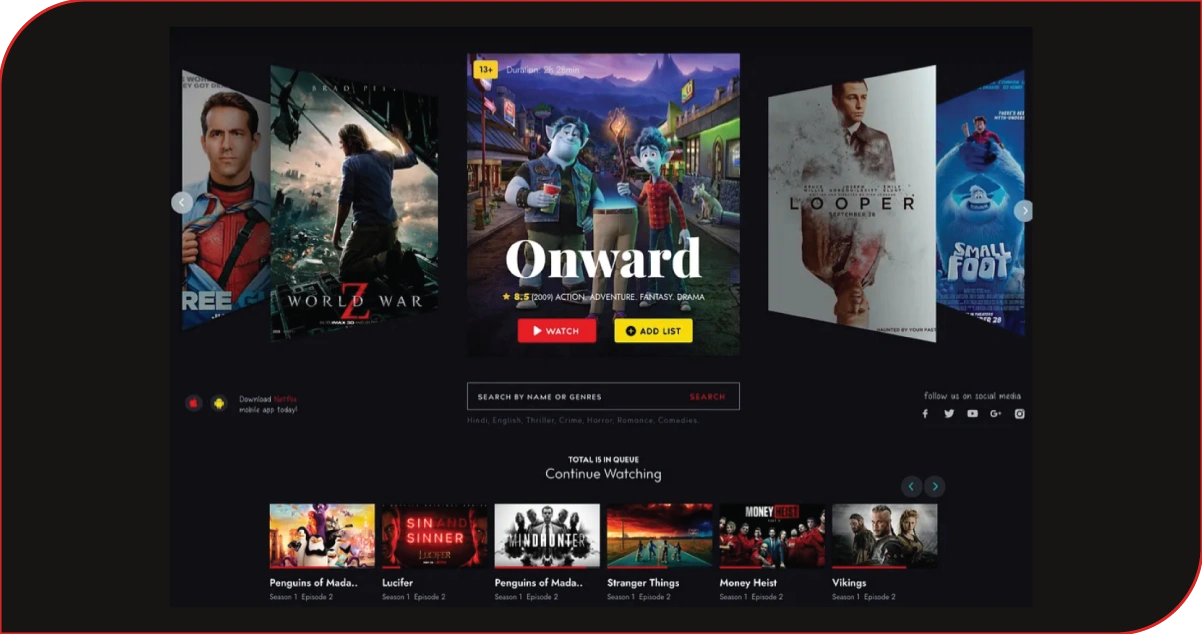
Once metadata is standardized, exploratory data analysis provides a statistical snapshot of content evolution and category distribution. Using a Netflix Dataset for EDA, analysts apply Python-based libraries such as Pandas and NumPy to compute descriptive metrics, while visualization libraries help interpret production growth, genre dominance, and release cadence trends.
EDA reveals that content output accelerated sharply after 2015, aligning with international market expansion and original programming investments. Decade-wise aggregation highlights how production volumes increased significantly during the streaming boom era.
Release Year Trend Table:
| Decade | Number of Titles |
|---|---|
| 1990–1999 | 1,145 |
| 2000–2009 | 2,830 |
| 2010–2014 | 4,960 |
| 2015–2019 | 8,215 |
| 2020–2023 | 3,282 |
Top Content Genres Table:
| Genre | Number of Titles |
|---|---|
| Drama | 6,430 |
| Comedy | 4,280 |
| Documentary | 2,910 |
| Action | 2,140 |
| Thriller | 1,860 |
Analysts can further segment data by maturity rating, region, and language to uncover localized consumption behaviors. Visual summaries such as bar charts and stacked plots translate complex distributions into intuitive insights, enabling stakeholders to make informed decisions regarding content acquisition, portfolio diversification, and market positioning.
Comparing Visual Insights Across Content Types

Visualization models transform numeric metadata into actionable intelligence. By performing Netflix TV Shows Data Analytics, analysts can examine how content types differ in structure, release cadence, and audience engagement patterns. Movies typically cluster around 90–120 minutes, while episodic titles demonstrate multi-season growth curves.
Automated extraction workflows powered by Web Scraping With Python Beautifulsoup ensure continuous dataset updates, allowing dashboards and reports to remain current. These visual pipelines support near real-time monitoring of catalog expansions and genre shifts.
Movie Duration Distribution Table:
| Duration Range | Movie Count |
|---|---|
| 60–90 mins | 3,120 |
| 90–120 mins | 6,580 |
| 120–150 mins | 2,450 |
| 150+ mins | 1,100 |
TV Show Seasons Distribution Table:
| Seasons | Show Count |
|---|---|
| 1 | 3,820 |
| 2–3 | 2,140 |
| 4–5 | 780 |
| 6+ | 442 |
Comparative dashboards help stakeholders assess lifecycle patterns, content longevity, and genre saturation. By integrating automated scraping with structured visualization workflows, organizations can maintain a continuous feedback loop between content performance metrics and strategic planning initiatives.
How OTT Scrape Can Help You?
In the evolving OTT ecosystem, actionable metadata intelligence plays a critical role in content planning and competitive benchmarking. By applying Netflix Content Metadata Scraping, businesses can systematically track content expansions, regional diversity, and genre investments across global markets.
Our specialized OTT scraping solutions enable:
- Automated metadata extraction across multiple OTT platforms.
- Scalable data pipelines for daily or weekly updates.
- Advanced EDA workflows with visual dashboards.
- Genre, region, and maturity rating segmentation.
- Competitive benchmarking against rival platforms.
- Custom reporting aligned with strategic goals.
Whether you are a content strategist, OTT startup, or analytics firm, our solutions provide structured intelligence to support informed decisions. We help organizations unlock consistent content insights and real-time visibility into market trends.
Conclusion
The rapid growth of OTT platforms demands robust data intelligence frameworks capable of processing large-scale content metadata. Through structured pipelines, Python EDA models, and visual analytics, Netflix Content Metadata Scraping enables organizations to convert thousands of titles into measurable insights that inform content investments and regional expansion strategies.
From automated extraction to trend visualization, this analytical workflow supports smarter content planning and market positioning. By applying Netflix Movies Data Analysis, businesses can monitor evolving genre dynamics and production shifts with precision. Contact OTT Scrape today to build custom scraping and analytics solutions tailored to your content goals.