
Introduction
India’s OTT landscape has reached a pivotal stage where regional narratives, language diversity, and hyperlocal viewing habits directly influence subscriber expansion. Driven by widespread smartphone adoption and low-cost data access, audiences from Tier II and Tier III markets now dominate streaming engagement. By leveraging JioHotstar Data Scraping in the middle of strategic analysis, platforms can capture accurate regional demand signals, enabling data-backed content investments that replace assumption-led decisions with measurable insights.
Streaming platforms must evaluate millions of interactions daily—watch time, episode completion rates, language preferences, and seasonal spikes—to understand what resonates locally. Traditional market surveys often fail to capture this depth or update fast enough. That is where data-led intelligence becomes essential.
This approach helps studios, advertisers, and media planners anticipate shifts in viewer interest before trends peak. Using Scraping Data From JioHotstar, analysts can interpret how regional audiences respond to new releases, regional originals, and dubbed content. These insights form the backbone of scalable forecasting models that guide programming strategies, optimize regional marketing spends, and reduce the risk associated with content production across India’s diverse linguistic landscape.
Understanding Regional Audience Gaps Through Platform Signals
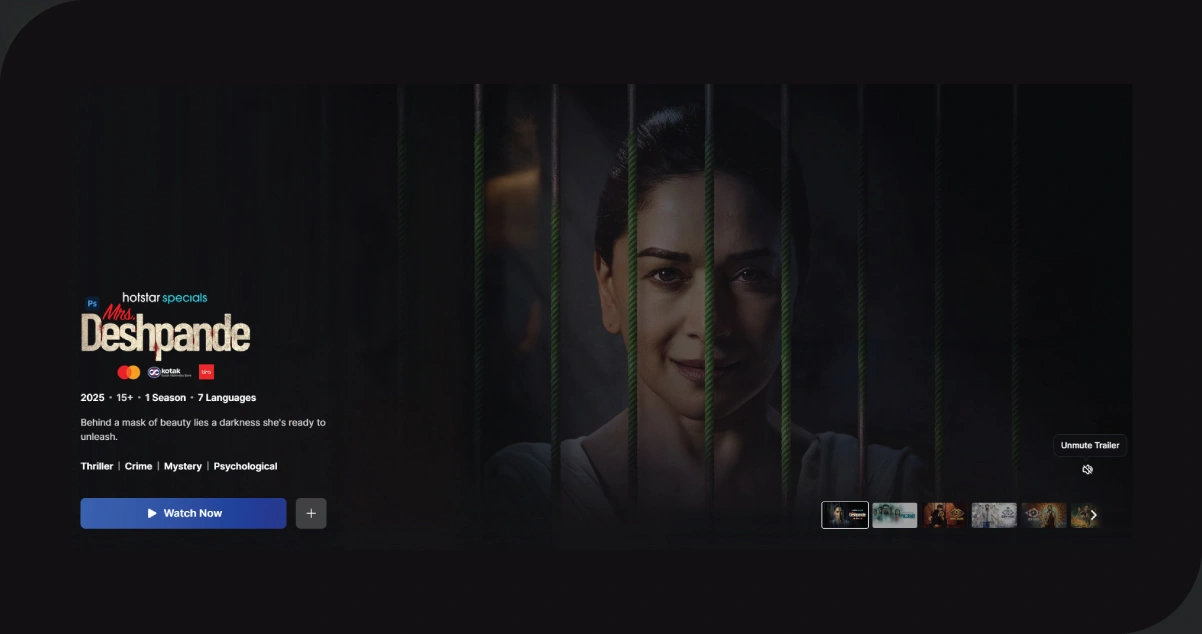
India’s OTT consumption growth hides a critical challenge—regional demand is not evenly matched with content supply. While national-level metrics suggest steady engagement, deeper inspection reveals sharp disparities in viewing preferences across states and language belts. Using Scraping Data From JioHotstar, analysts can move beyond surface-level numbers and identify which regions experience content saturation and which remain underserved.
This approach evaluates viewing duration, repeat watch behavior, and genre affinity across geographies. When these indicators are aligned with JioHotstar Regional Content Analysis, patterns emerge that show how regional narratives outperform generic formats in culturally aligned markets. For instance, localized dramas and reality formats often sustain engagement longer than pan-India releases in non-metro regions.
Such insights help content planners correct imbalance early. Instead of expanding libraries uniformly, teams can prioritize regions where demand is evident but supply is limited. This reduces content fatigue and increases audience satisfaction without escalating production costs. Regional insights also support targeted promotional strategies, ensuring marketing investments reach audiences most likely to engage.
Regional Engagement Comparison
| Metric | High-Supply Regions | Under-Served Regions |
|---|---|---|
| Average Session Duration | 44 minutes | 61 minutes |
| Repeat View Rate | 52% | 76% |
| Regional Genre Preference | Moderate | High |
| Content Availability Index | High | Low |
Anticipating Language Trends Using Predictive Viewing Models
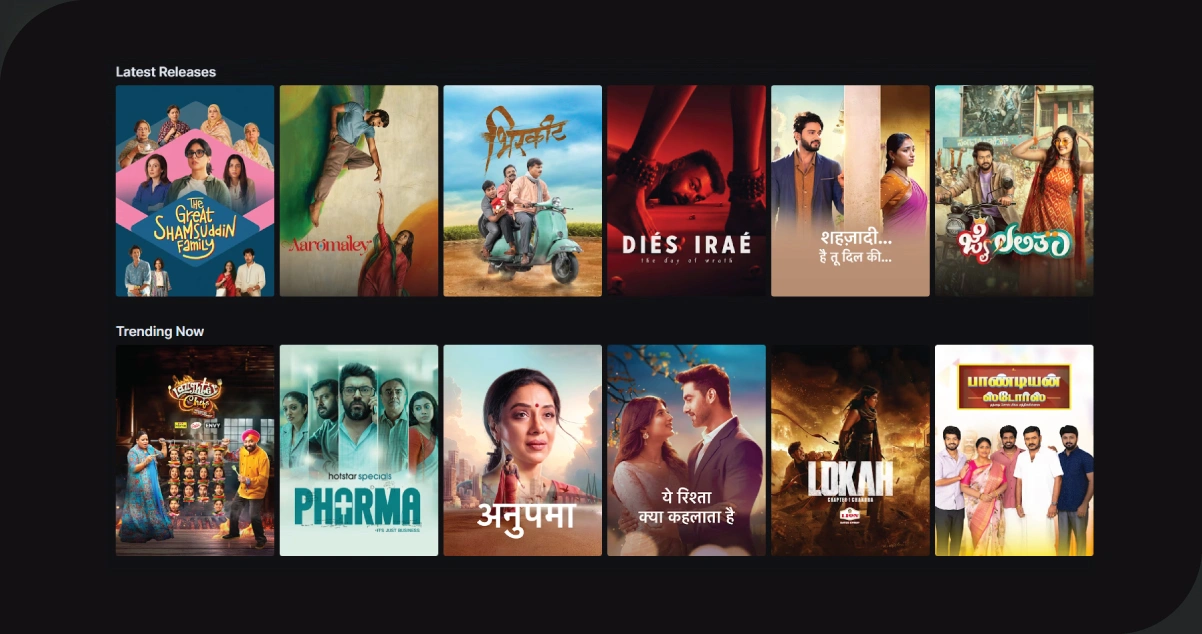
Forecasting viewer demand requires more than historical averages; it depends on identifying behavioral signals that indicate future interest. Language preferences, seasonal influences, and cultural events significantly affect viewing decisions. By applying JioHotstar Demand Forecasting, platforms can model these variables to predict which content categories will perform strongest in upcoming cycles.
Predictive analysis reveals that regional language consumption increases notably during festival periods and regional holidays, while dubbed or national content performs better during off-season months. These shifts become clearer when combined with Regional Content Demand Prediction, which links past performance to anticipated audience response.
Such models help streaming platforms avoid reactive decision-making. Instead of waiting for engagement dips, content teams can pre-emptively schedule releases aligned with regional demand peaks. This approach improves first-week traction and extends content lifespan. It also allows acquisition teams to balance originals with licensed content efficiently.
Language-Based Demand Forecast Overview
| Language Segment | Predicted Growth | High-Engagement Period |
|---|---|---|
| Tamil | 33% | Q3 |
| Telugu | 30% | Q2–Q3 |
| Bengali | 27% | Q4 |
| Marathi | 25% | Q1–Q4 |
Converting Viewer Behavior Into Revenue Strategies
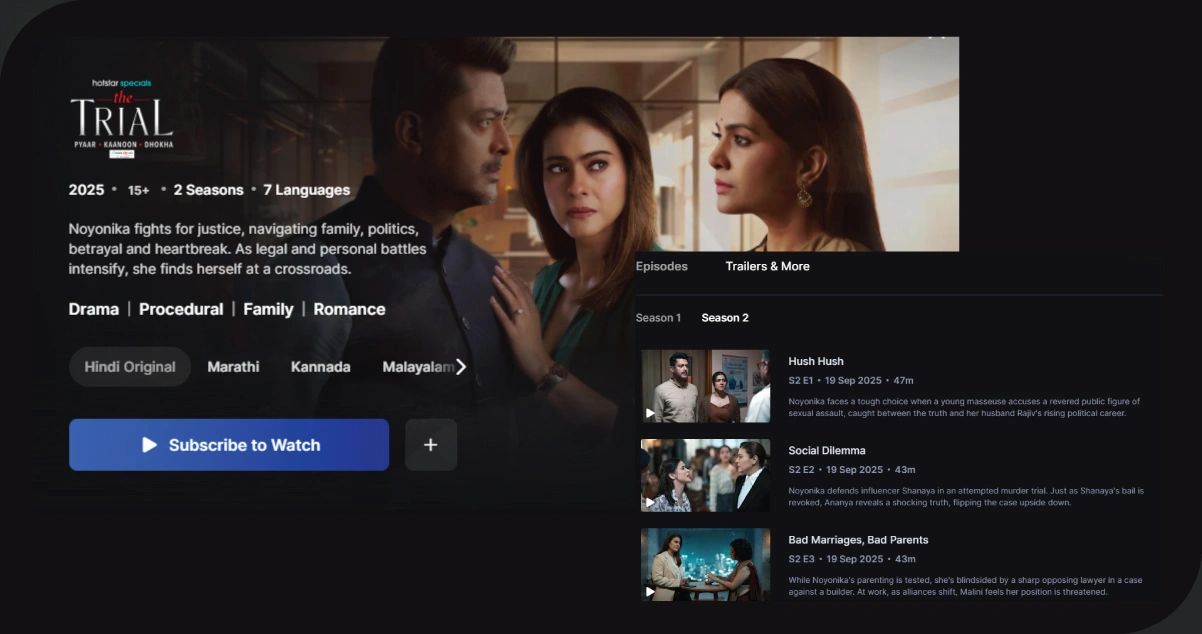
OTT monetization depends heavily on understanding where engagement translates into commercial value. Regional behavior insights help platforms align advertising, pricing, and subscription strategies more effectively. Through JioHotstar Viewership Trend Analysis, platforms can evaluate how different regions respond to ad formats, content length, and release timing.
This analysis highlights that non-metro audiences often show higher ad tolerance and longer watch durations, making them ideal for targeted ad-supported models. Meanwhile, metro audiences demonstrate stronger preference for premium, uninterrupted viewing experiences. These distinctions become actionable when supported by structured JioHotstar Content Data Extraction, which converts raw engagement data into monetization intelligence.
Such insights enable smarter ad slot pricing, region-specific subscription bundles, and tailored campaign placements. Advertisers benefit from higher relevance, while platforms maximize yield without compromising user experience. Over time, this data-driven approach strengthens advertiser trust and improves revenue predictability.
Regional Monetization Performance Indicators
| Region Category | Ad Engagement Lift | Subscription Conversion |
|---|---|---|
| Metro | 11% | 10% |
| Tier II Cities | 18% | 15% |
| Tier III Cities | 23% | 19% |
Enhancing OTT Insights with Jio Hotstar Data Scraping
India’s streaming ecosystem is rapidly evolving, with regional preferences, language diversity, and hyperlocal viewing habits shaping audience engagement. Platforms using Jio Hotstar Data Scraping Service can capture structured datasets covering watch time, episode completion, language preferences, and seasonal engagement trends. These insights allow streaming services to move beyond assumptions, making data-driven decisions that improve content planning and audience targeting.
Analyzing these datasets helps uncover gaps in content supply, highlighting regions and genres with high demand. Localized dramas and reality shows, for example, often sustain greater engagement in non-metro areas compared to pan-India releases. Predictive analysis also reveals seasonal and language-driven shifts in viewer interest, helping platforms schedule releases strategically and balance originals with licensed content.
How OTT Scrape Can Help You?
Regional OTT intelligence requires scalable data systems capable of processing millions of user interactions daily. Advanced analytics built on JioHotstar Data Scraping enable businesses to convert raw streaming signals into structured forecasting models that reflect real audience behavior across India.
Key Support Areas:
- Granular regional audience segmentation.
- Language-wise performance benchmarking.
- Seasonal demand pattern mapping.
- Content lifecycle performance tracking.
- Regional ad inventory optimization.
- Data-backed content investment planning.
By integrating Hotstar OTT Data Scraping, organizations gain continuous visibility into evolving regional preferences, helping teams respond faster to market shifts and plan content pipelines with higher confidence.
Conclusion
Regional OTT success increasingly depends on data precision rather than assumptions. When platforms rely on JioHotstar Data Scraping, they gain measurable clarity on where demand is growing, which languages outperform, and how audiences respond across diverse regions.
With actionable insights derived through Scrape JioHotstar Content Data, media companies can reduce content risk, improve regional engagement, and align investments with real viewer behavior. Contact OTT Scrape today to build forecasting models that transform regional insights into long-term streaming growth.